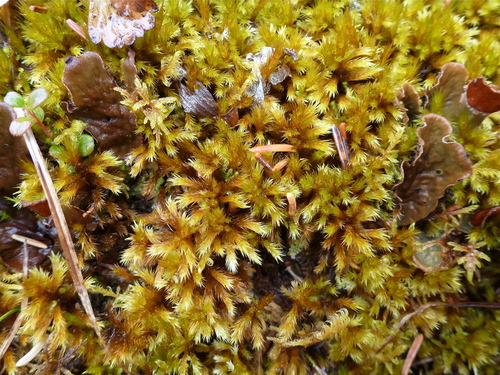
Golden Fuzzy Fen Moss
Tomentypnum nitens
Photo: (c) Jeff Stauffer, all rights reserved, uploaded by Jeff Stauffer
Overview
A detailed profile for this species is sourced from the IUCN Red List of Threatened Species as assessments become available.
Woolly Feather-moss faces severe threats from habitat degradation and climate change impacts on its specialized wetland environments. The species is particularly vulnerable due to its dependence on specific hydrological conditions and water chemistry, which are increasingly disrupted by human activities and changing precipitation patterns.
Habitat
Woolly Feather-moss occurs in minerotrophic wetlands, particularly rich fens, calcareous mires, and wet meadows with consistent groundwater flow. The species requires specific water chemistry conditions and is typically found in areas with neutral to slightly alkaline pH and high mineral content.
Other threatened species in Amblystegiaceae


Frequently asked questions
Why is Golden Fuzzy Fen Moss classified as Critically Endangered?
Where does Golden Fuzzy Fen Moss live?
What are the main threats to Golden Fuzzy Fen Moss?
Get weekly conservation intelligence
One short digest a week of the most striking species and country data we ship, plus breaking conservation news paired with our database where it matters.
Free, no spam. One-click unsubscribe in every email.