Curled Hook-moss
VUVulnerable

Curled Hook-moss

Palustriella commutata

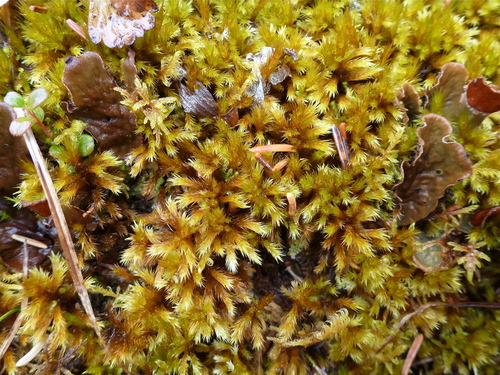
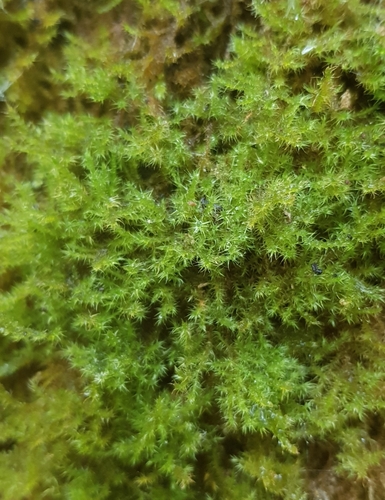
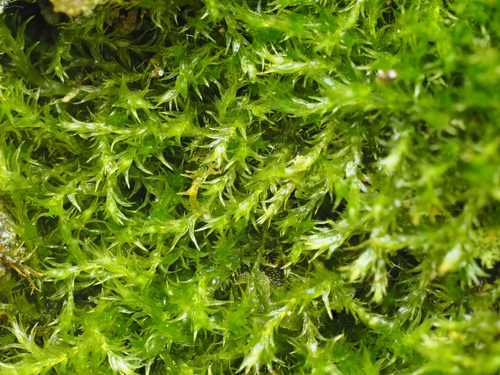
Palustriella commutata, commonly known as curled hookmoss, is a plant that also goes by the binomial names Cratoneuron commutatum, Cratoneuron falcatum, Hypnum commutatum, and Hypnum falcatum.

Photo: Wikimedia Commons (CC) via https://en.wikipedia.org/wiki/Palustriella_commutata

01Classification

Taxonomy & Classification

Kingdom

Plantae

Phylum

Bryophyta

Class

Bryopsida

Order

Hypnales

Family

Amblystegiaceae

Genus

Palustriella

Curled Hook-moss belongs to the family Amblystegiaceae, order Hypnales, within the Bryopsida class.

02Description

Species Profile

Palustriella commutata, commonly known as curled hookmoss, is a plant that also goes by the binomial names Cratoneuron commutatum, Cratoneuron falcatum, Hypnum commutatum, and Hypnum falcatum.

Curled Hook-moss faces significant threats from habitat degradation and loss of its specialized wetland environments. Climate change and altered hydrology from human activities are reducing the availability of suitable calcareous spring and seepage habitats. Water pollution and eutrophication further compromise the water quality conditions this species requires for survival.

Key Facts

IUCN StatusVulnerable (VU)
GroupPlants
03Habitat

Habitat & Distribution

Calcareous springs, seepages, and wet rock faces in mountainous and hilly regions, typically growing on limestone or other calcium-rich substrates. Also found along stream banks and in other permanently moist, mineral-rich environments with consistent water flow.

04Threats

Threats

Altered hydrology from development

HighOngoing

Habitat loss and degradation

HighOngoing

Agricultural runoff contamination

MediumOngoing

Climate change impacts on water sources

MediumOngoing

Water pollution and eutrophication

MediumOngoing
07National Status

National vs Global Threat Status

How this species is assessed at the national level compared to its IUCN global status (VU).

CountryNational StatusGlobal StatusComparison
EULCLeast ConcernVUVulnerableLower local risk

National Red List data sourced from the National Red List Project (nationalredlist.org, ZSL) and country-specific Red List authorities.

Community

Community Sightings

Report a sighting

No community sightings yet. Be the first to report!

07Sources

Sources & Attribution

How to Cite

IUCN: IUCN (2025). The IUCN Red List of Threatened Species. Version 2025-1. Available at: https://www.iucnredlist.org. doi:10.2305/IUCN.UK.2025-1.RLTS

GBIF: GBIF.org (2025). GBIF Home Page. Available at: https://www.gbif.org

National Red Lists: ZSL (2025). National Red List. Zoological Society of London. Available at: https://www.nationalredlist.org

This page: SpeciesRadar (2025). Curled Hook-moss (Palustriella commutata). SpeciesRadar: Intelligence for Earth's Biodiversity. Available at: https://speciesradar.org/species/curled-hook-moss

Full citation guide & data usage terms