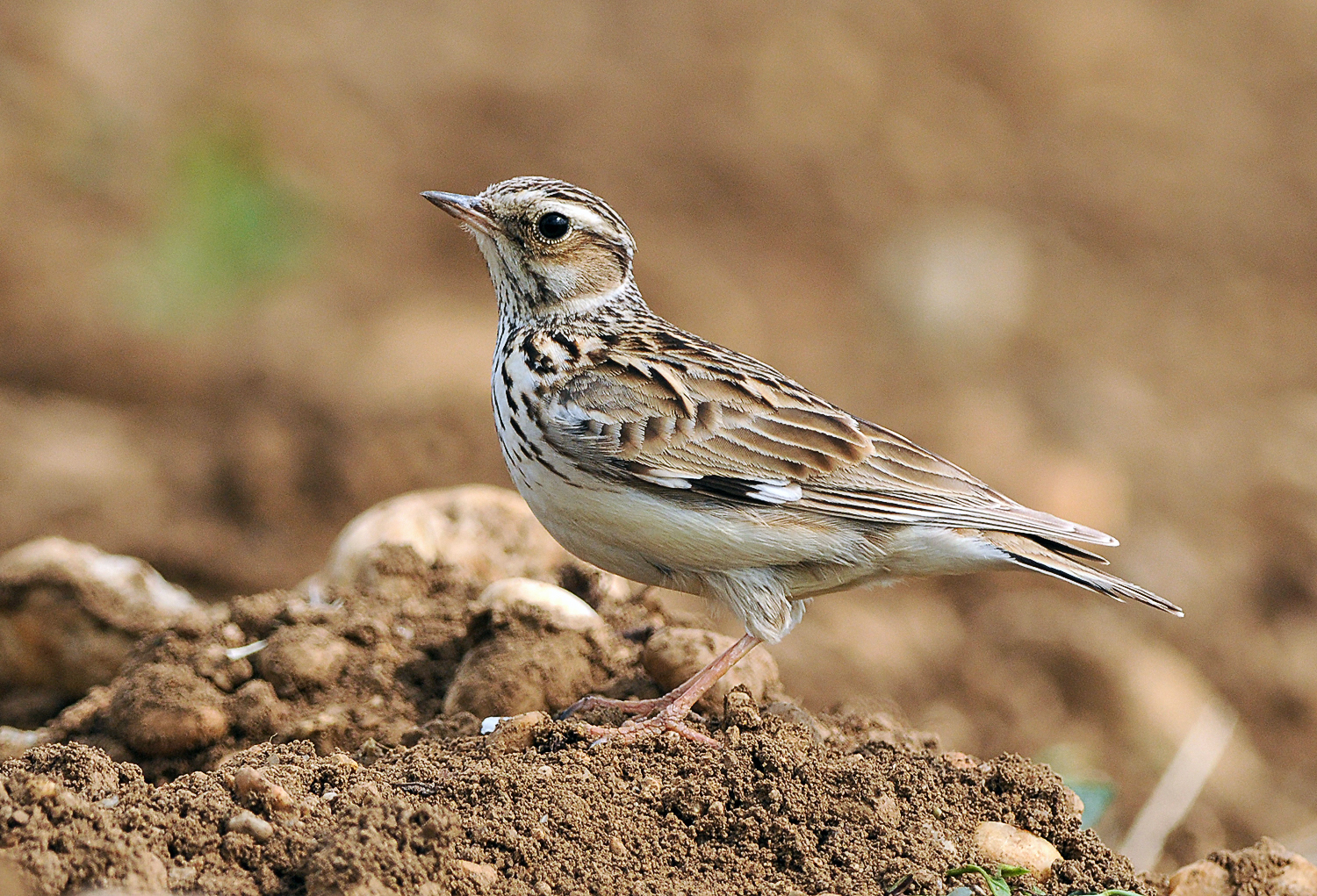
WOLA
Lullula arborea
Photo: Wikimedia Commons (CC) via https://en.wikipedia.org/wiki/Woodlark
Overview
A detailed profile for this species is sourced from the IUCN Red List of Threatened Species as assessments become available.
Wood Lark populations have declined significantly across Europe due to intensive agricultural practices that eliminate the mosaic of short grassland and bare ground essential for foraging. Afforestation of heathlands and the abandonment of traditional grazing systems have reduced suitable breeding habitat, while increased recreational pressure on remaining heathland sites causes disturbance during the critical nesting period. Climate change may be shifting suitable habitat northward, potentially fragmenting already isolated populations.
Habitat
Wood Larks inhabit open landscapes with a mosaic of short grassland, bare ground, and scattered trees or shrubs, including heathlands, forest clearings, and extensively grazed pastures. They require areas with less than 50% vegetation cover for ground foraging and elevated perches for territorial singing.
Other threatened species in Alaudidae

Frequently asked questions
Why is WOLA classified as Vulnerable?
Where does WOLA live?
What are the main threats to WOLA?
Get weekly conservation intelligence
One short digest a week of the most striking species and country data we ship, plus breaking conservation news paired with our database where it matters.
Free, no spam. One-click unsubscribe in every email.