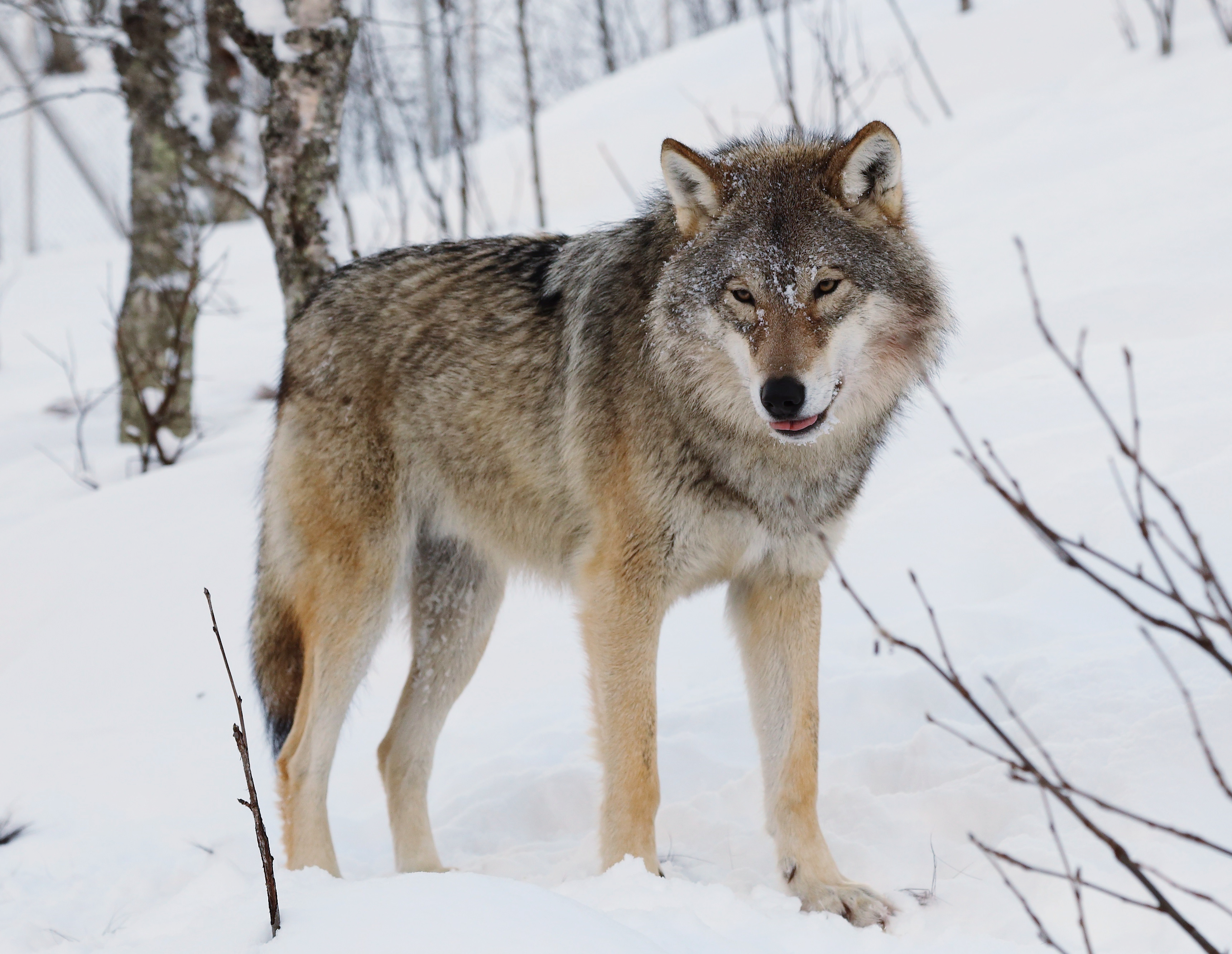
American Wolf
Canis lupus
Photo: Wikimedia Commons (CC) via https://en.wikipedia.org/wiki/Wolf
Overview
A detailed profile for this species is sourced from the IUCN Red List of Threatened Species as assessments become available.
The wolf faces severe population declines due to extensive habitat fragmentation, human-wildlife conflict, and systematic persecution across much of its historical range. Livestock predation leads to retaliatory killings, while expanding human development continues to reduce and fragment suitable wilderness areas. Conservation status may vary by region or assessment authority, but multiple threats continue to impact wolf populations globally.
Habitat
Wolves occupy diverse habitats including boreal and temperate forests, tundra, grasslands, and mountainous regions, typically requiring large territories with adequate prey populations and minimal human disturbance. They prefer wilderness areas and semi-wild landscapes that can support viable populations of ungulate prey species.
Other threatened species in Canidae


Frequently asked questions
Why is American Wolf classified as Critically Endangered?
Where does American Wolf live?
What are the main threats to American Wolf?
Get weekly conservation intelligence
One short digest a week of the most striking species and country data we ship, plus breaking conservation news paired with our database where it matters.
Free, no spam. One-click unsubscribe in every email.