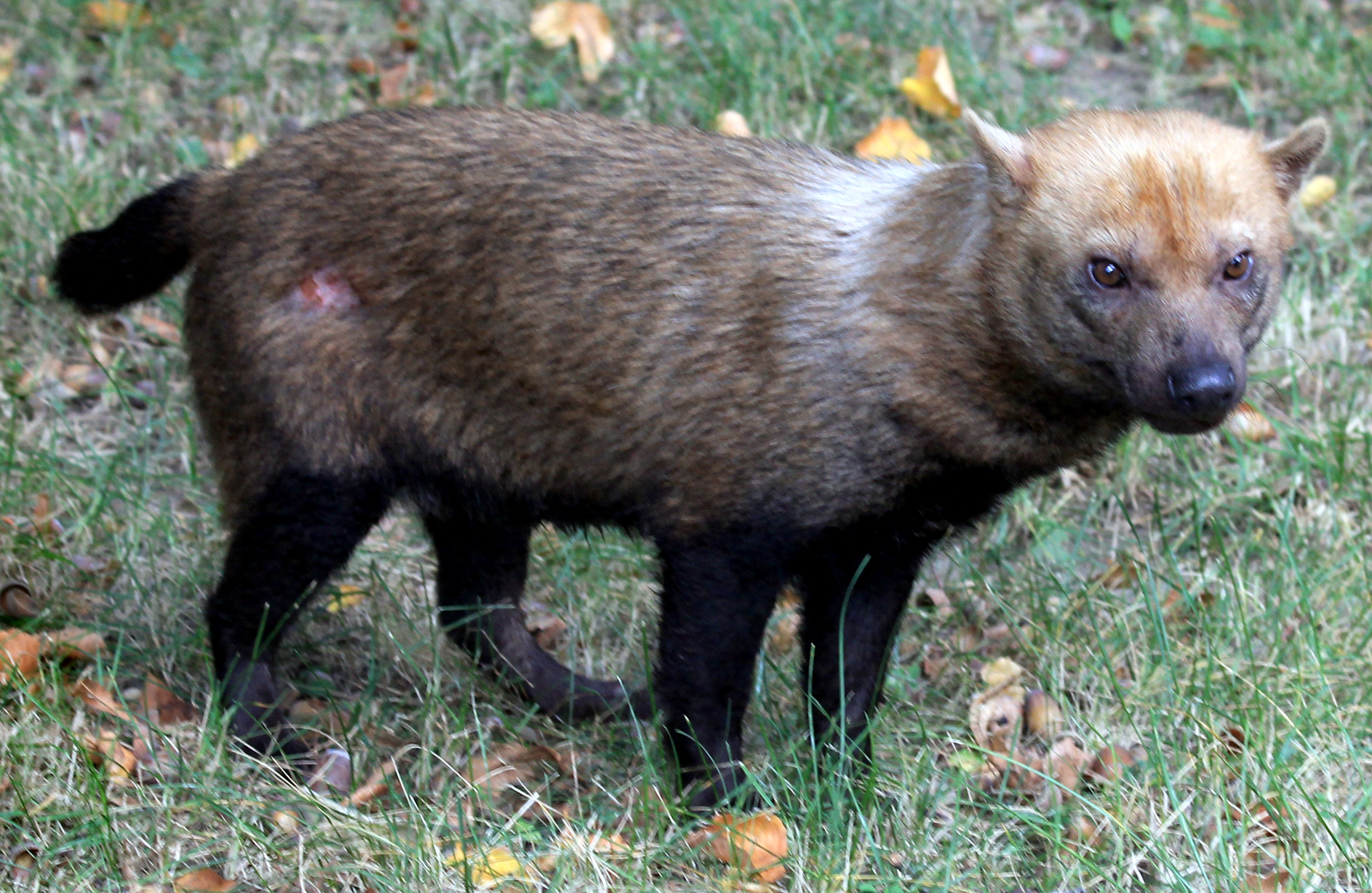
Bush Dog
Speothos venaticus
Photo: Wikimedia Commons (CC) via https://en.wikipedia.org/wiki/Bush_dog
Overview
The bush dog is a canine found in Central and South America. In spite of its extensive range, it is very rare in most areas except in Suriname, Guyana and Peru; it was first described by Peter Wilhelm Lund from fossils in Brazilian caves and was believed to be extinct.
The Bush Dog faces significant threats from habitat loss and fragmentation due to deforestation, agricultural expansion, and human development across its range in South American forests and wetlands. Its naturally low population densities and elusive nature make it particularly vulnerable to habitat disruption, while hunting pressure and competition with domestic dogs further threaten remaining populations.
Habitat
Bush Dogs inhabit tropical rainforests, gallery forests, wet savannas, and seasonally flooded areas throughout the Amazon Basin and Cerrado regions of South America. They prefer areas near water sources and are semi-aquatic, often found in lowland forests, woodland savannas, and riparian zones up to 1,000 meters elevation.
Other threatened species in Canidae


Frequently asked questions
Why is Bush Dog classified as Vulnerable?
Where does Bush Dog live?
What are the main threats to Bush Dog?
Get weekly conservation intelligence
One short digest a week of the most striking species and country data we ship, plus breaking conservation news paired with our database where it matters.
Free, no spam. One-click unsubscribe in every email.