Windbalea viride
Overview
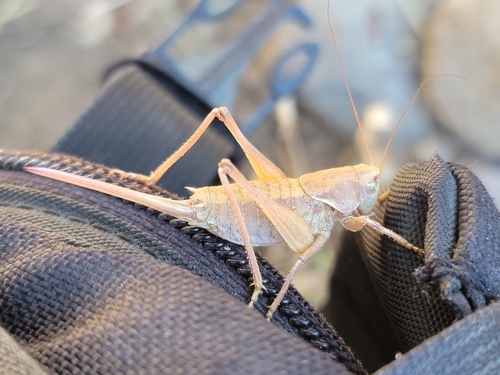
Windbalea viride is a bush cricket belonging to the family Tettigoniidae, order Orthoptera. Like other katydids, it possesses elongated hind legs adapted for jumping, long filamentous antennae, and cryptic green coloration that provides camouflage among foliage. Males likely produce calling songs through stridulation to attract mates, a common trait in this family.
As with related tettigoniids, this species probably plays a role in its ecosystem as both herbivore and prey item, contributing to nutrient cycling and forming part of the food web supporting insectivorous birds, reptiles, and small mammals.
The species is endemic to Australia, where it inhabits terrestrial environments. Its range appears to be naturally restricted, a factor that increases its vulnerability to localized disturbances.
Windbalea viride is classified as Vulnerable by the IUCN Red List. The population trend is currently unknown, meaning trajectory data is limited. Multiple ongoing threats affect the species, including agricultural expansion and intensification, which reduces and fragments available habitat, and urban and residential development, which further encroaches on remaining natural areas.
Climate change is altering habitat conditions across its range, potentially affecting vegetation structure and microclimate suitability. Compounding these pressures, the species' inherently small population size and restricted geographic distribution leave it with limited resilience against environmental change or stochastic events.
Specific conservation programs targeting this species are not well documented, though its Vulnerable listing means it may benefit from broader habitat protection measures and land-use planning policies in Australia aimed at conserving native terrestrial ecosystems.
Given the combination of ongoing habitat loss, climate pressures, and inherent range restriction, the species' long-term outlook remains uncertain without more targeted monitoring and habitat safeguards.
Windbalea viride is losing habitat as land is cleared for farming and expanding towns and cities, while a shifting climate is also altering the conditions it depends on. Because it already survives in only a small area with few individuals, it has little room to recover from these pressures. Overall, these combined threats appear to be ongoing and intensifying rather than easing.
Habitat
Windbalea viride inhabits specialized terrestrial environments, typically found in areas with specific soil and vegetation conditions that support its ecological requirements. The species appears to be adapted to particular microhabitat conditions that make it sensitive to environmental disturbances.
Other threatened species in TETTIGONIIDAE
Threatened in Australia
Frequently asked questions
Why is Windbalea viride classified as Vulnerable?
Where does Windbalea viride live?
What are the main threats to Windbalea viride?
Get weekly conservation intelligence
One short digest a week of the most striking species and country data we ship, plus breaking conservation news paired with our database where it matters.
Free, no spam. One-click unsubscribe in every email.