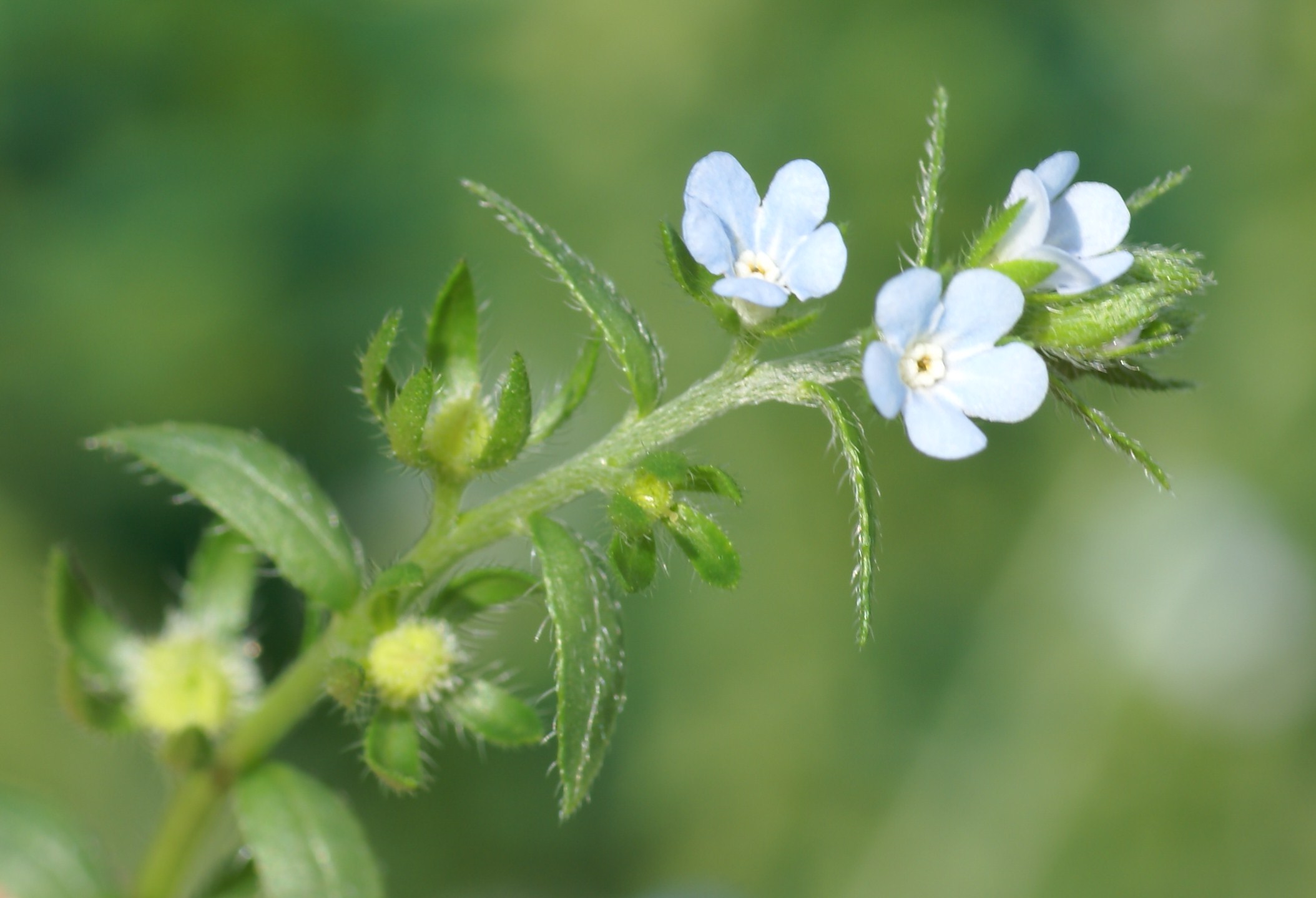
White Ironweed
CR

White Ironweed

Buglossoides arvensis

Unknown

Photo: Wikimedia Commons (CC) via https://en.wikipedia.org/wiki/Buglossoides_arvensis

Overview

White Ironweed (Buglossoides arvensis) is a small annual herb in the borage family (Boraginaceae) that stands as one of Europe's most critically endangered wildflowers. This delicate plant typically reaches 10-40 centimeters in height, producing distinctive white, funnel-shaped flowers that bloom from May through July. The narrow, lance-shaped leaves are covered in fine hairs, giving the entire plant a somewhat greyish-green appearance.

Historically found across scattered locations in central and southern Europe, White Ironweed inhabits disturbed calcareous soils, particularly in agricultural margins, abandoned fields, and areas with periodic soil disturbance. The species has experienced catastrophic population declines over the past century, leading to its classification as Critically Endangered (CR) by the IUCN. Once recorded from multiple countries including Germany, France, and parts of Eastern Europe, current populations are extremely fragmented and many historical sites have been lost entirely.

The plant's annual lifecycle and dependence on specific soil conditions make it particularly vulnerable to modern agricultural intensification and land use changes. White Ironweed requires open, nutrient-poor calcareous substrates that are increasingly rare in today's landscape. Despite its precarious status, recent targeted conservation efforts in several European countries have successfully located and protected remaining populations, with seed banking programs now preserving genetic material for potential future restoration projects.

These initiatives offer hope for preventing the complete extinction of this remarkable species.

White Ironweed faces extinction primarily due to agricultural intensification that has eliminated the disturbed, nutrient-poor calcareous soils it requires for germination and establishment. The widespread use of herbicides and fertilizers in modern farming has fundamentally altered soil chemistry and eliminated the periodic disturbance regimes that historically maintained suitable habitat. Urban development and infrastructure expansion have destroyed many of the marginal agricultural lands where remnant populations persisted, while the remaining fragments are too small and isolated to support viable long-term populations.

Threat summary

Habitat

White Ironweed inhabits open, disturbed calcareous soils with low nutrient content, typically found along agricultural field margins, abandoned croplands, and areas subject to periodic soil disturbance. The species requires well-drained, alkaline substrates and cannot tolerate dense vegetation or nutrient-enriched soils.

TERRESTRIAL· majorTERRESTRIAL· major

Frequently asked questions

Why is White Ironweed classified as Critically Endangered?
White Ironweed is classified as Critically Endangered — facing an extremely high risk of extinction in the wild — because population sizes are very small, declining sharply, or restricted to a tiny range. White Ironweed faces extinction primarily due to agricultural intensification that has eliminated the disturbed, nutrient-poor calcareous soils it requires for germination and establishment. The widespread use of herbicides and fertilizers in modern farming has fundamentally altered soil chemistry and eliminated the periodic disturbance regimes that historically maintained suitable habitat. Urban development and infrastructure expansion have destroyed many of the marginal agricultural lands where remnant populations persisted, while the remaining fragments are too small and isolated to support viable long-term populations.
Where does White Ironweed live?
White Ironweed occurs in Afghanistan, Åland Islands, Albania, Algeria, Andorra, and Argentina (plus 86 other countries). Country-level distribution data is sourced from the IUCN Red List and cross-referenced with GBIF occurrences.
What are the main threats to White Ironweed?
The main threats to White Ironweed are habitat loss and human disturbance. The full IUCN-classified threat record for this species is detailed on the species page.

Get weekly conservation intelligence

One short digest a week of the most striking species and country data we ship, plus breaking conservation news paired with our database where it matters.

Free, no spam. One-click unsubscribe in every email.