Wellington's Solitary Coral
Rhizopsammia wellingtoni
Overview
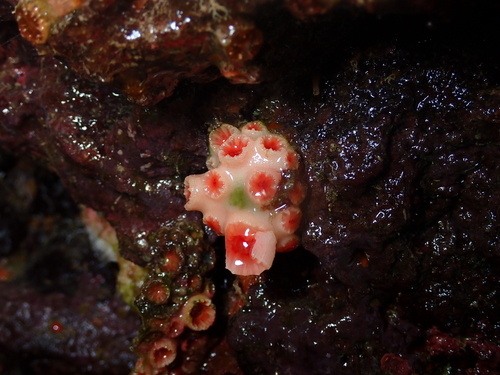
Rhizopsammia wellingtoni, or Wellington's solitary coral, is an endemic species of coral from the Galápagos Islands in Ecuador, recorded between 2 and 43 metres underwater. Before 1982, this species was considered abundant at some sites, but the El Niño event of 1982 and 1983 destroyed most of its existing population. For more than two decades, the species evaded detection by researchers and was therefore presumed extinct.
However, in January 2024, a joint expedition of researchers from the California Academy of Sciences, Galapagos National Park Directorate, and the Charles Darwin Foundation successfully identified the species at four locations off the coasts of Isabela and Fernandina, thus confirming its continued existence.
Rhizopsammia wellingtoni faces severe threats from deep-sea mining activities and bottom trawling that directly destroy its fragile coral habitat on seamounts and deep-water ridges. Ocean acidification poses an additional critical threat, as increasing acidity levels impair the species' ability to build and maintain its calcium carbonate skeleton. Climate change-driven alterations in deep-sea temperatures and currents further compromise the stable conditions this endemic coral requires for survival.
Habitat
Rhizopsammia wellingtoni inhabits deep-water environments on seamounts, continental slopes, and underwater ridges at depths typically ranging from 200 to 1,000 meters. This solitary coral species requires hard substrates and stable water conditions with specific temperature and nutrient regimes characteristic of deep-sea ecosystems.
Conservation measures underway
Other threatened species in DENDROPHYLLIIDAE

Threatened in Ecuador
Frequently asked questions
Why is Wellington's Solitary Coral classified as Critically Endangered?
Where does Wellington's Solitary Coral live?
What are the main threats to Wellington's Solitary Coral?
Get weekly conservation intelligence
One short digest a week of the most striking species and country data we ship, plus breaking conservation news paired with our database where it matters.
Free, no spam. One-click unsubscribe in every email.