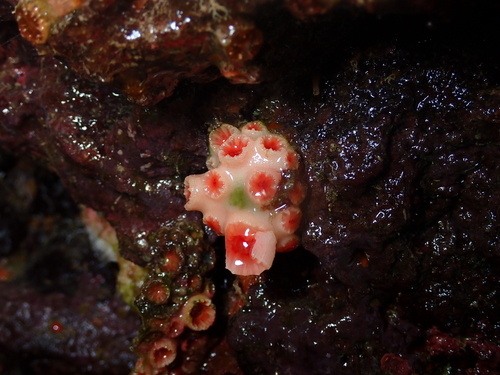
Tubastraea floreana
Photo: (c) Billy Bensted-Smith, some rights reserved (CC BY-NC), uploaded by Billy Bensted-Smith
Overview
Tubastraea floreana is a hard coral species endemic to the Galápagos Islands, specifically found in the waters surrounding Floreana Island. This colonial coral belongs to the family Dendrophylliidae and forms distinctive orange to yellow polyp colonies on rocky substrates in marine environments. As an azooxanthellate coral, it does not rely on symbiotic algae for nutrition and instead feeds by capturing plankton and organic particles from the water column.
The species is currently classified as Critically Endangered by the IUCN, with populations showing a decreasing trend. The primary threats to T. floreana include ocean warming and acidification associated with climate change, which affect coral calcification and overall health.
The species' extremely limited geographic range makes it particularly vulnerable to environmental disturbances and local extinction events. Marine pollution, including plastic debris and chemical contaminants, poses additional risks to coral health and reproduction. The introduction of invasive species and physical damage from human activities such as anchoring and diving may further impact remaining populations.
Conservation efforts focus on marine protected area management within the Galápagos Marine Reserve, monitoring of coral health and population status, and research into coral resilience and adaptation mechanisms. Climate change mitigation remains crucial for the long-term survival of this endemic species, along with continued protection of its marine habitat from local anthropogenic pressures.
Tubastraea floreana faces severe threats from climate change-induced ocean warming and acidification, which compromise coral health and calcification processes. The species' extremely restricted range around Floreana Island makes it highly vulnerable to local environmental disturbances and extinction events. Additional pressures include marine pollution, invasive species, and physical damage from human activities.
Habitat
This coral species inhabits rocky marine substrates in the waters surrounding Floreana Island in the Galápagos archipelago. It typically occurs in areas with adequate water flow that supports its filter-feeding lifestyle as an azooxanthellate coral.
Conservation measures underway
Other threatened species in DENDROPHYLLIIDAE

Threatened in Colombia
Frequently asked questions
Why is Tubastraea floreana classified as Critically Endangered?
Where does Tubastraea floreana live?
What are the main threats to Tubastraea floreana?
Get weekly conservation intelligence
One short digest a week of the most striking species and country data we ship, plus breaking conservation news paired with our database where it matters.
Free, no spam. One-click unsubscribe in every email.