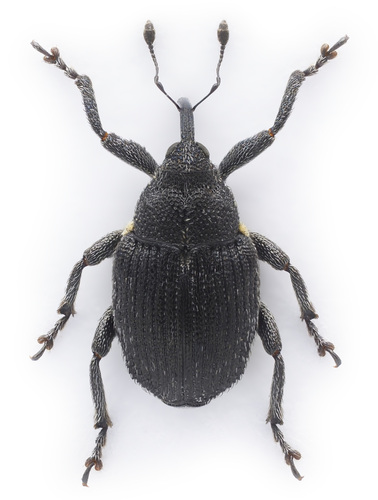
Cabbage Gall Weevil
Ceutorhynchus assimilis
Photo: Photo: (c) Mark Gurney, some rights reserved (CC BY-SA)
Overview
A detailed profile for this species is sourced from the IUCN Red List of Threatened Species as assessments become available.
The Turnip Gall Weevil faces severe population declines due to intensive agricultural practices that eliminate its host plants and breeding sites. Widespread pesticide use in agricultural areas directly kills adults and larvae, while habitat fragmentation isolates remaining populations and reduces genetic diversity.
Habitat
Agricultural margins, field edges, and disturbed ground where cruciferous plants including wild turnip, oilseed rape, and related Brassicaceae species grow. The species requires areas with sufficient host plant density for gall formation and overwintering sites in nearby soil or plant debris.
Other threatened species in Curculionidae

Frequently asked questions
Why is Cabbage Gall Weevil classified as Critically Endangered?
Where does Cabbage Gall Weevil live?
What are the main threats to Cabbage Gall Weevil?
Get weekly conservation intelligence
One short digest a week of the most striking species and country data we ship, plus breaking conservation news paired with our database where it matters.
Free, no spam. One-click unsubscribe in every email.