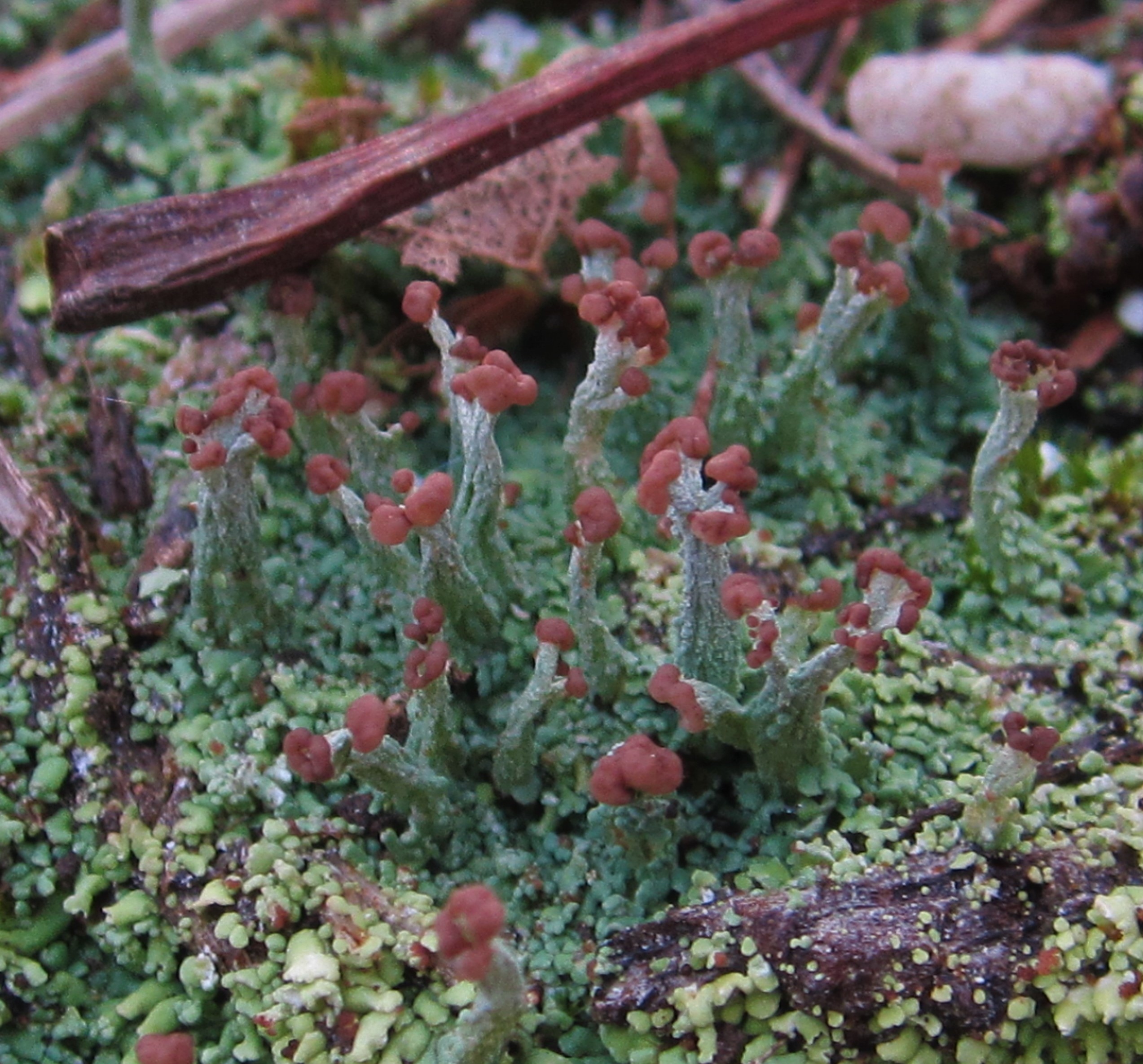
Cup Lichen
Cladonia peziziformis
Photo: Wikimedia Commons (CC) via https://en.wikipedia.org/wiki/Cladonia_peziziformis
Overview
A detailed profile for this species is sourced from the IUCN Red List of Threatened Species as assessments become available.
Turban Lichen faces severe decline due to habitat degradation from agricultural intensification and urban development across its limited European range. Air pollution, particularly nitrogen deposition from industrial sources, disrupts the delicate chemical balance required for this slow-growing lichen's survival. Climate change compounds these pressures by altering precipitation patterns and increasing temperature extremes that stress lichen communities.
Habitat
Turban Lichen grows on acidic soils in open heathlands, moorlands, and sandy grasslands, typically in areas with low nutrient levels and minimal disturbance. It favors well-drained, exposed sites with sparse vegetation cover, often found on sandy banks, path edges, and disturbed ground in coastal and inland heath systems.
Other threatened species in Cladoniaceae


Frequently asked questions
Why is Cup Lichen classified as Endangered?
Where does Cup Lichen live?
What are the main threats to Cup Lichen?
Get weekly conservation intelligence
One short digest a week of the most striking species and country data we ship, plus breaking conservation news paired with our database where it matters.
Free, no spam. One-click unsubscribe in every email.