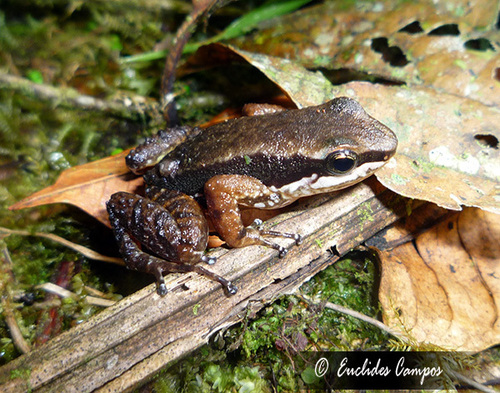
Truando Rocket Frog
Colostethus latinasus
Photo: (c) Euclides "Kilo" Campos, all rights reserved, uploaded by Euclides "Kilo" Campos
Overview
Colostethus latinasus is a species of frog in the family Dendrobatidae. It is known from Cerro Pirre in Darién Province, Panama, from Chocó Department in adjacent Colombia, and from Tierralta, Córdoba Department, Colombia.
Colostethus latinasus faces severe threats from habitat destruction due to deforestation, agricultural expansion, and urban development within its limited range. The species is particularly vulnerable to water pollution and climate change impacts that alter the delicate moisture and temperature conditions required for its survival and reproduction.
Habitat
This species inhabits humid montane forests and cloud forests at elevations between 1,500-2,500 meters, particularly areas near streams, seepages, and other freshwater sources. It requires pristine forest environments with consistent moisture levels and stable microclimatic conditions.
Conservation measures underway
Other threatened species in DENDROBATIDAE

Threatened in Brazil


Frequently asked questions
Why is Truando Rocket Frog classified as Critically Endangered?
Where does Truando Rocket Frog live?
What are the main threats to Truando Rocket Frog?
Get weekly conservation intelligence
One short digest a week of the most striking species and country data we ship, plus breaking conservation news paired with our database where it matters.
Free, no spam. One-click unsubscribe in every email.