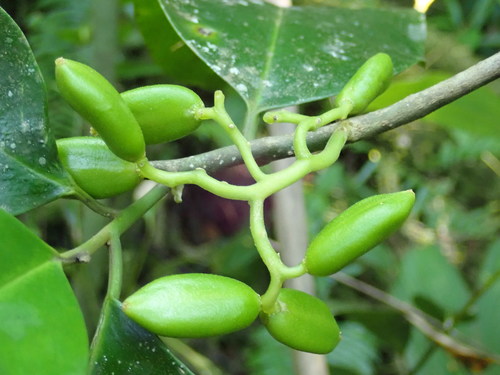
False-fig
Trilepisium gymnandrum
Photo: Photo: (c) silhouetteco, some rights reserved (CC BY-NC)
Overview
Trilepisium gymnandrum is a species of Trilepisium that is endemic to the Seychelles, where it is threatened by habitat loss. Its natural habitat is subtropical or tropical moist lowland forests. Five mature individuals are known in two sub-populations in the mid to high elevation forests of Silhouette Island. The 18th century populations of the larger Mahé and Praslin islands have presumably been extirpated.
Trilepisium gymnandrum faces severe population decline primarily due to extensive deforestation and habitat conversion for agricultural expansion across its limited range in Southeast Asia. The species' restricted distribution makes it particularly vulnerable to localized habitat destruction, while selective logging targets mature forest stands where this tree species typically occurs. Climate change compounds these pressures by altering precipitation patterns essential for the species' reproductive cycles.
Habitat
Trilepisium gymnandrum inhabits primary and secondary tropical rainforests, typically occurring in lowland and hill forest ecosystems up to 800 meters elevation. The species shows preference for well-drained soils in mature forest stands with closed canopy cover.
Conservation measures underway
Other threatened species in MORACEAE
Threatened in Seychelles
Frequently asked questions
Why is False-fig classified as Critically Endangered?
Where does False-fig live?
What are the main threats to False-fig?
Get weekly conservation intelligence
One short digest a week of the most striking species and country data we ship, plus breaking conservation news paired with our database where it matters.
Free, no spam. One-click unsubscribe in every email.