
Tricarinate Hill Turtle
Melanochelys tricarinata
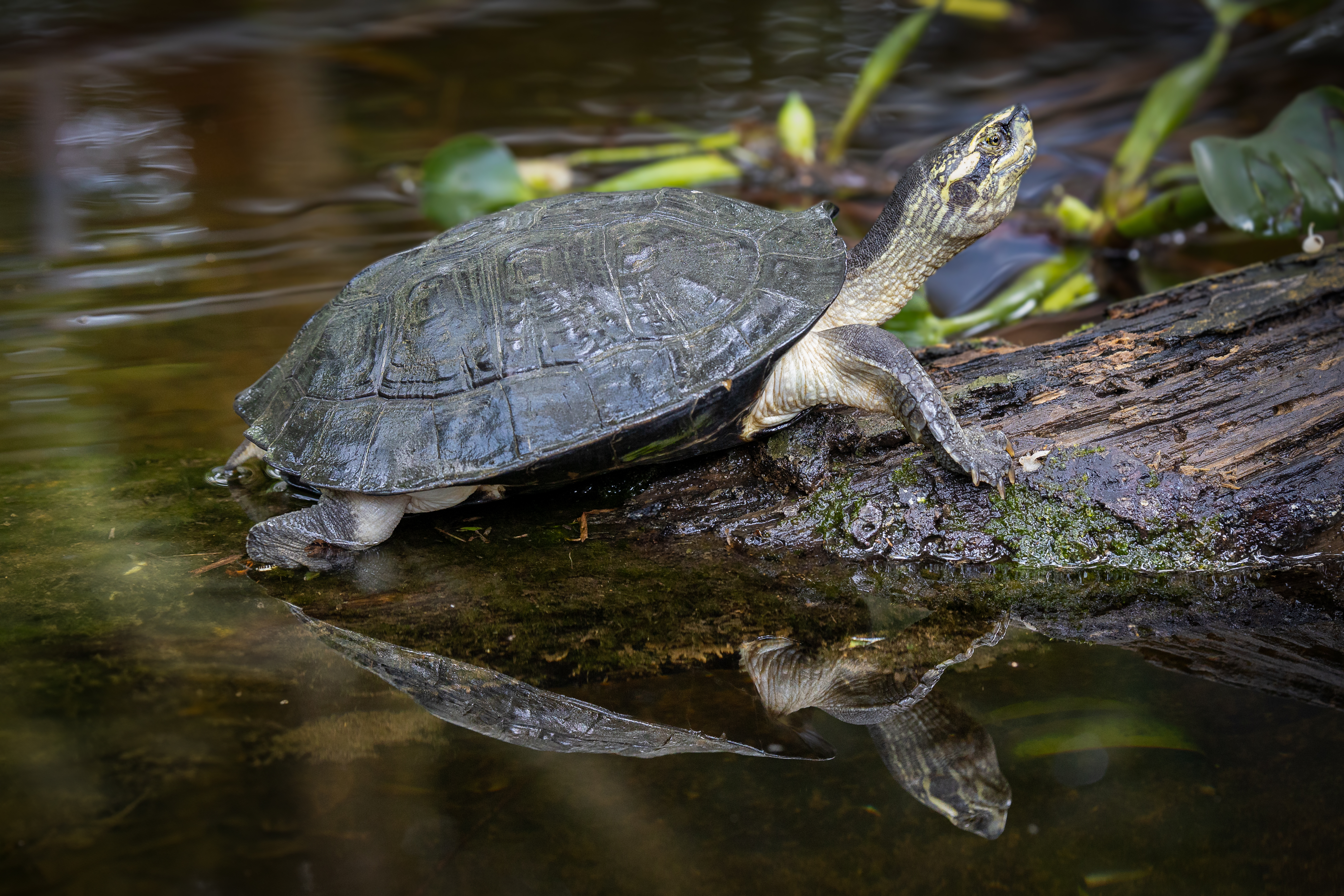
Photo: Wikimedia Commons (CC) via https://en.wikipedia.org/wiki/Tricarinate_hill_turtle
Overview
The Tricarinate Hill Turtle is a medium-sized freshwater turtle distinguished by three prominent ridges (keels) running along its dark brown to black carapace. Adults typically measure 15-20 cm in length, with females generally larger than males. The species exhibits semi-aquatic behavior, spending time both in water and on land, feeding on aquatic vegetation, fruits, insects, and small fish.
As both predator and prey, these turtles play an important role in maintaining aquatic ecosystem balance.
This species inhabits permanent rivers and streams across parts of South Asia, with populations documented in Bangladesh, northeastern India, and Nepal. They prefer slow-moving waterways with muddy bottoms and abundant vegetation, often in hilly or mountainous regions that give the species its common name.
The Tricarinate Hill Turtle faces severe pressure from multiple human activities. Intensive hunting and trapping for local consumption and traditional medicine use represents the primary threat. Habitat degradation through logging operations along waterways destroys nesting sites and reduces food availability. Additionally, fishing activities and general harvesting of aquatic resources disrupts their ecosystem and can result in incidental capture.
Conservation efforts remain limited, with the species protected under various national wildlife protection acts in its range countries. Some populations exist within protected areas, though enforcement of hunting restrictions proves challenging in remote regions.
The species' outlook remains concerning, with continued population declines across its range. Without enhanced protection measures and reduced exploitation pressure, the Tricarinate Hill Turtle faces an uncertain future.
The three-keeled land tortoise faces serious threats from people who hunt and trap them, likely for food or the pet trade. Their forest homes are also being damaged by logging operations that cut down trees for wood, and by fishing and hunting activities that disturb their habitat. All of these threats are currently ongoing, putting continued pressure on the species.
Habitat
Conservation measures underway
Other threatened species in GEOEMYDIDAE

Threatened in Bangladesh



Frequently asked questions
Why is Tricarinate Hill Turtle classified as Endangered?
Where does Tricarinate Hill Turtle live?
What are the main threats to Tricarinate Hill Turtle?
Get weekly conservation intelligence
One short digest a week of the most striking species and country data we ship, plus breaking conservation news paired with our database where it matters.
Free, no spam. One-click unsubscribe in every email.