Throscodectes xiphos
Overview
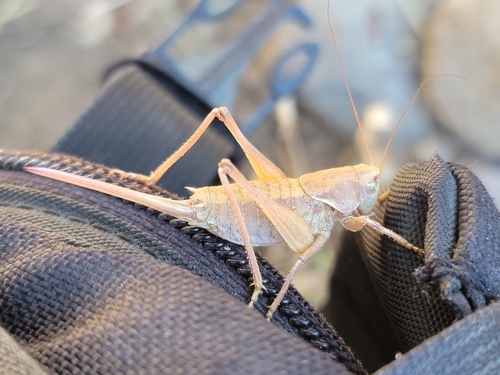
Throscodectes xiphos is a katydid belonging to the family Tettigoniidae, a lineage of large-bodied, long-antennaed insects known for their camouflage and acoustic communication. Like other tettigoniids, individuals of this species are likely nocturnal, relying on cryptic body forms to avoid predators while foraging on vegetation. As herbivorous or omnivorous insects, katydids in this genus typically contribute to nutrient cycling and serve as prey for birds, reptiles, and other insectivorous animals, making them a functional part of terrestrial food webs.
The species is restricted to Australia, where it occupies terrestrial habitats, likely forested or vegetated landscapes typical of the genus. Its range appears to be limited, a factor consistent with its Endangered status under the IUCN Red List.
Several ongoing pressures threaten its persistence. Deforestation and logging reduce and fragment available habitat, while agricultural expansion converts native vegetation into farmland, further shrinking suitable living space. Mining and quarrying operations physically destroy habitat and can alter local hydrology and soil conditions.
Climate change compounds these pressures by shifting temperature and rainfall patterns, potentially pushing suitable conditions beyond the species' current range. Additionally, because the population appears small, it faces heightened risk from genetic bottlenecks, which can reduce adaptive capacity and increase vulnerability to further environmental change.
Specific conservation programs targeting Throscodectes xiphos are not well documented, though it would likely benefit from broader habitat protection efforts, forest conservation initiatives, and land-use planning that limits further clearing in its native range.
The population trend for this species is currently unknown, and no numerical population estimates are available. Given the combination of ongoing habitat loss, small population size, and climate pressures, its long-term outlook remains uncertain without targeted intervention and further population monitoring.
Throscodectes xiphos is losing its natural habitat as forests are cut down for timber and cleared to make way for farmland, while mining and quarrying operations further break up and destroy its living space. Shifting weather and climate patterns are also changing the habitat it depends on, and because its population is already small, these pressures put it at risk of losing genetic diversity, making it harder for the species to adapt and recover. Overall, these combined threats appear to be ongoing and stable, though the small population size means even steady pressure could tip toward decline if conditions worsen.
Habitat
This species inhabits montane cloud forests and humid tropical forests at elevations between 1,200-2,400 meters. It requires dense canopy cover and specific microclimate conditions found in undisturbed primary forest ecosystems.
Other threatened species in TETTIGONIIDAE
Threatened in Australia
Frequently asked questions
Why is Throscodectes xiphos classified as Endangered?
Where does Throscodectes xiphos live?
What are the main threats to Throscodectes xiphos?
Get weekly conservation intelligence
One short digest a week of the most striking species and country data we ship, plus breaking conservation news paired with our database where it matters.
Free, no spam. One-click unsubscribe in every email.