
Three-striped Roofed Turtle
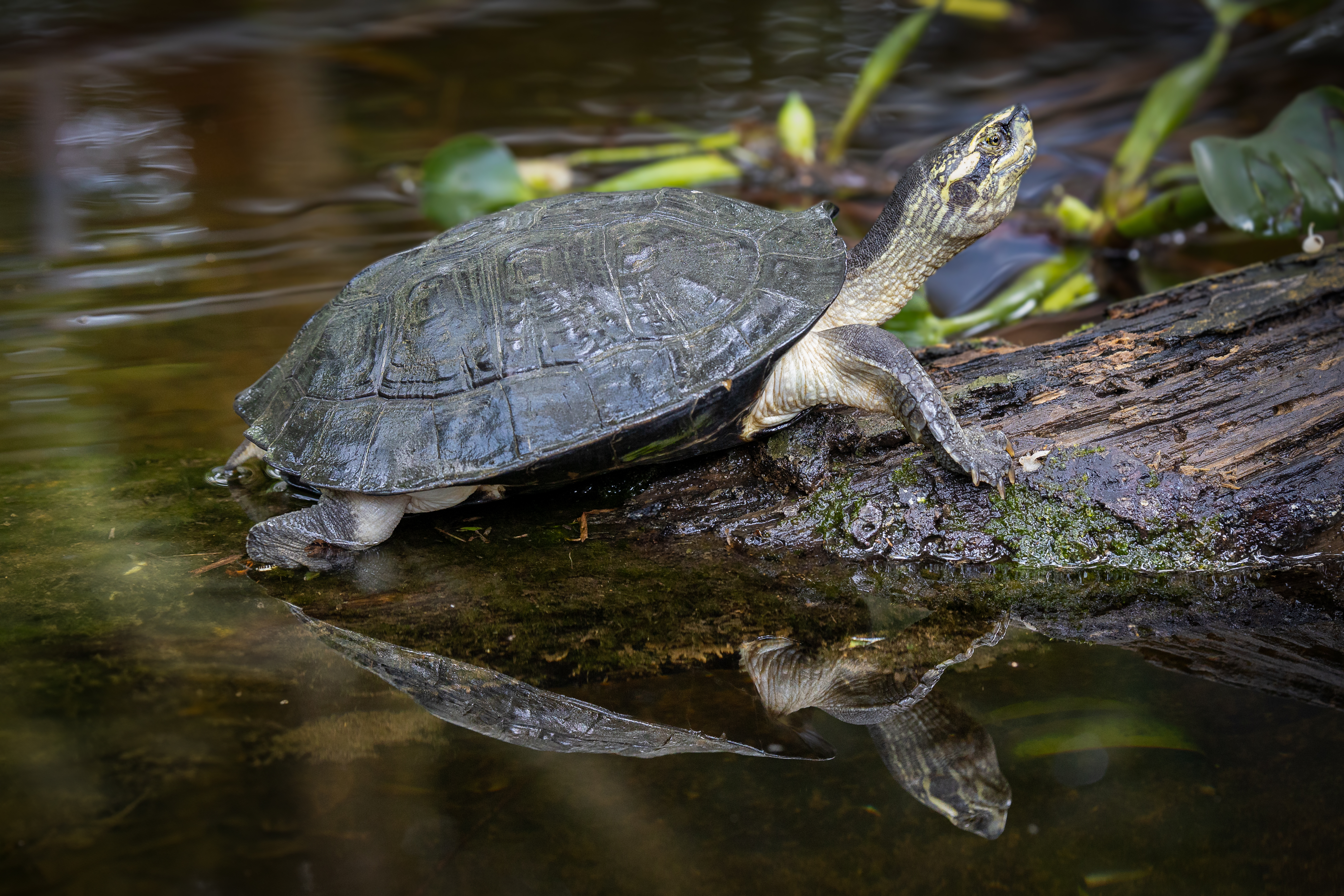
Batagur dhongoka
Photo: Wikimedia Commons (CC) via https://en.wikipedia.org/wiki/Three-striped_roofed_turtle
Overview
The Three-striped Roofed Turtle is a large freshwater turtle distinguished by its distinctive domed carapace featuring three prominent ridges and characteristic yellow stripes on the head and neck. Adults can reach shell lengths of up to 60 centimeters, making them one of South Asia's largest river turtles. These primarily herbivorous reptiles feed on aquatic vegetation, fruits, and occasionally small invertebrates, playing a crucial role in maintaining aquatic ecosystem balance through seed dispersal and vegetation control.
This species inhabits major river systems across Bangladesh, India, and Nepal, particularly the Ganges, Brahmaputra, and their tributaries. They prefer deep, slow-moving waters with sandy or muddy bottoms and require sandy riverbanks for nesting. Females migrate considerable distances to traditional nesting beaches during breeding season.
The species faces severe population decline due to multiple pressures. Intensive egg collection and adult harvesting for meat and traditional medicine have devastated breeding populations. Fishing activities result in frequent accidental capture, while sand mining and dam construction destroy critical nesting habitats. Water pollution from industrial and agricultural sources further degrades their aquatic environment.
Conservation efforts include captive breeding programs in India and Bangladesh, with some facilities successfully hatching and releasing juveniles. Protected area designations cover portions of their range, and community-based conservation initiatives work with local populations to reduce egg harvesting.
Despite these measures, the species' outlook remains critical. Continued habitat destruction and persistent hunting pressure suggest further population decline is likely without significantly expanded conservation intervention and enforcement of protective regulations across their remaining range.
The Batagur dhongoka turtle faces serious threats from people hunting and trapping them for food or trade, as well as from unknown types of pollution contaminating their water habitats. They are also harmed when fishing activities and other aquatic harvesting disturb their environment, and when hunting of other animals in the same areas affects the overall ecosystem balance. All of these threats are currently ongoing with no clear indication of whether they are getting better or worse.
Habitat
Conservation measures underway
Other threatened species in GEOEMYDIDAE


Threatened in Bangladesh



Frequently asked questions
Why is Three-striped Roofed Turtle classified as Critically Endangered?
Where does Three-striped Roofed Turtle live?
What are the main threats to Three-striped Roofed Turtle?
Get weekly conservation intelligence
One short digest a week of the most striking species and country data we ship, plus breaking conservation news paired with our database where it matters.
Free, no spam. One-click unsubscribe in every email.