Thesium subsucculentum
Overview
Thesium subsucculentum is a little-known member of the sandalwood family (Santalaceae), a genus renowned for its many hemiparasitic species that draw water and nutrients from the roots of neighboring plants while photosynthesizing on their own. This species is classified as Critically Endangered (CR) by the IUCN, with a population trend recorded as decreasing. It is native to a narrow range within southern Africa, where Thesium diversity is concentrated in fynbos and succulent karoo habitats characterized by nutrient-poor soils, winter rainfall, and high plant endemism.
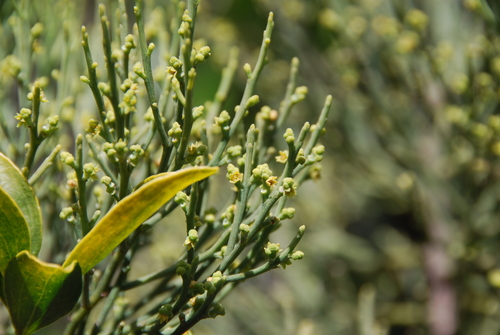
Like many of its congeners, it likely presents as a small, wiry, semi-succulent shrublet with reduced, scale-like leaves adapted to arid, sun-exposed conditions, an anatomy suited to the semi-parasitic lifestyle typical of the genus. Its extreme rarity means that detailed population counts and precise distributional boundaries remain sparse in the scientific literature, but its CR listing reflects a documented pattern of habitat degradation across its restricted range. Primary pressures on this species stem from agricultural conversion, livestock grazing, and encroaching development in the biodiversity-rich but heavily impacted regions where succulent karoo and fynbos vegetation persists.
Because many Thesium species depend on specific host plants, disruption to surrounding vegetation communities compounds the risk to their survival. Conservation attention for narrow-range Santalaceae like this one typically comes through inclusion in regional Red List assessments and protected area planning aimed at safeguarding southern Africa's exceptional floristic hotspots. Encouragingly, growing botanical interest in South Africa's succulent karoo and fynbos ecosystems has spurred expanded field surveys and herbarium-based taxonomic work, improving the chances that overlooked populations of species like Thesium subsucculentum will be rediscovered, monitored, and incorporated into targeted habitat protection efforts going forward.
Thesium subsucculentum faces severe threats from agricultural expansion and urban development across its extremely limited range in the Western Cape of South Africa. The species' specialized parasitic relationship with specific host plants makes it particularly vulnerable to habitat fragmentation, as both the species and its hosts require intact fynbos ecosystems. Invasive alien plant species further degrade remaining habitat patches, while climate change threatens the delicate moisture balance required for this succulent parasitic plant's survival.
Habitat
This species is endemic to the fynbos vegetation of the Western Cape, South Africa, where it grows as a root parasite in sandy soils of coastal and inland shrublands. It requires specific host plants within the diverse fynbos ecosystem and is adapted to the Mediterranean climate with winter rainfall and dry summers.
Conservation measures underway
Other threatened species in SANTALACEAE
Threatened in Spain
Frequently asked questions
Why is Thesium subsucculentum classified as Critically Endangered?
Where does Thesium subsucculentum live?
What are the main threats to Thesium subsucculentum?
Get weekly conservation intelligence
One short digest a week of the most striking species and country data we ship, plus breaking conservation news paired with our database where it matters.
Free, no spam. One-click unsubscribe in every email.