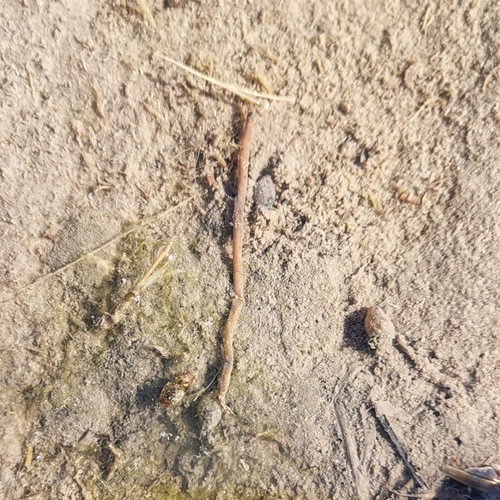
Thermosphaeroma cavicauda
Photo: (c) juanloredo, some rights reserved (CC BY-NC-SA), uploaded by juanloredo
Overview
Thermosphaeroma cavicauda is a small aquatic isopod crustacean endemic to thermal springs in the Mojave Desert region of California. This species belongs to a genus of thermophilic isopods that have adapted to live in warm spring environments, typically inhabiting waters with elevated temperatures that would be unsuitable for most other aquatic invertebrates. The species exhibits the characteristic rolled-ball defensive behavior common to many isopods when threatened.
T. cavicauda has a highly restricted distribution, found only in specific thermal spring systems where it occupies a narrow ecological niche. The species faces significant conservation challenges due to its extremely limited range and specialized habitat requirements.
Primary threats include habitat modification, water extraction, and human disturbance of spring systems. Climate change poses additional risks through potential alterations to spring flow patterns and water temperatures. The species' dependence on stable thermal conditions makes it particularly vulnerable to environmental changes.
Conservation efforts focus on habitat protection and monitoring of remaining populations, though detailed population assessments remain limited. The species' critical conservation status reflects both its restricted distribution and the ongoing pressures on desert spring ecosystems. Research continues into the species' ecology and population dynamics to inform conservation strategies.
Protection of thermal spring habitats is essential for the long-term survival of this specialized crustacean and other endemic species that depend on these unique desert oasis environments.
Thermosphaeroma cavicauda faces threats from habitat modification and water extraction activities that can alter or eliminate the thermal spring systems it depends on. Human disturbance and development near spring sites pose additional risks to this highly specialized species. Climate change may further threaten the species by affecting spring flow patterns and water temperatures critical to its survival.
Habitat
This species inhabits thermal springs in the Mojave Desert region of California, living in warm spring waters with elevated temperatures. It occupies a highly specialized aquatic environment within these desert spring systems where few other species can survive the thermal conditions.
Other threatened species in SPHAEROMATIDAE
Threatened in Mexico
Frequently asked questions
Why is Thermosphaeroma cavicauda classified as Critically Endangered?
Where does Thermosphaeroma cavicauda live?
What are the main threats to Thermosphaeroma cavicauda?
Get weekly conservation intelligence
One short digest a week of the most striking species and country data we ship, plus breaking conservation news paired with our database where it matters.
Free, no spam. One-click unsubscribe in every email.