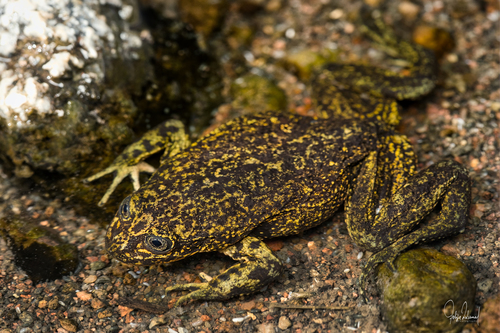
Telmatobius dankoi
Photo: (c) Felipe Rabanal, some rights reserved (CC BY-NC), uploaded by Felipe Rabanal
Overview
Telmatobius dankoi is a critically endangered aquatic frog endemic to the high-altitude regions of the Bolivian Andes. This species belongs to the genus Telmatobius, commonly known as water frogs or lake frogs, which are characterized by their adaptation to cold, oxygen-poor environments at extreme elevations. T.
dankoi inhabits permanent water bodies including lakes, streams, and wetlands in the altiplano region, where it has evolved specialized physiological adaptations to survive in harsh montane conditions. The species faces severe population declines due to multiple interconnected threats. Habitat degradation and loss represent primary concerns, driven by mining activities, agricultural expansion, and infrastructure development in its limited range.
Water pollution from mining operations and agricultural runoff has contaminated many of the pristine aquatic systems upon which the species depends. Climate change poses additional challenges, altering precipitation patterns and temperature regimes that affect water availability and quality in high-altitude ecosystems. The fungal disease chytridiomycosis, caused by Batrachochytrium dendrobatidis, has devastated amphibian populations throughout the Andes and likely impacts T.
dankoi populations. Conservation efforts for this species remain limited due to its remote habitat and restricted distribution. Research initiatives focus on population monitoring and habitat assessment, while broader conservation strategies emphasize protection of high-altitude wetland ecosystems.
The species' survival depends on immediate implementation of habitat protection measures and mitigation of anthropogenic threats within its narrow geographic range.
Telmatobius dankoi faces severe threats from habitat destruction caused by mining activities and agricultural development in Bolivia's high-altitude regions. Water pollution from industrial and agricultural sources contaminates the pristine aquatic systems essential for the species' survival. Climate change and the deadly chytrid fungus disease further compound these pressures on remaining populations.
Habitat
This species inhabits permanent water bodies including lakes, streams, and high-altitude wetlands in the Bolivian Andes. It is adapted to cold, oxygen-poor aquatic environments at extreme elevations in the altiplano region.
Conservation measures underway
Other threatened species in TELMATOBIIDAE


Threatened in Chile
Frequently asked questions
Why is Telmatobius dankoi classified as Critically Endangered?
Where does Telmatobius dankoi live?
What are the main threats to Telmatobius dankoi?
Get weekly conservation intelligence
One short digest a week of the most striking species and country data we ship, plus breaking conservation news paired with our database where it matters.
Free, no spam. One-click unsubscribe in every email.