Bartle Frere Cool-skink
Techmarscincus jigurru
Overview
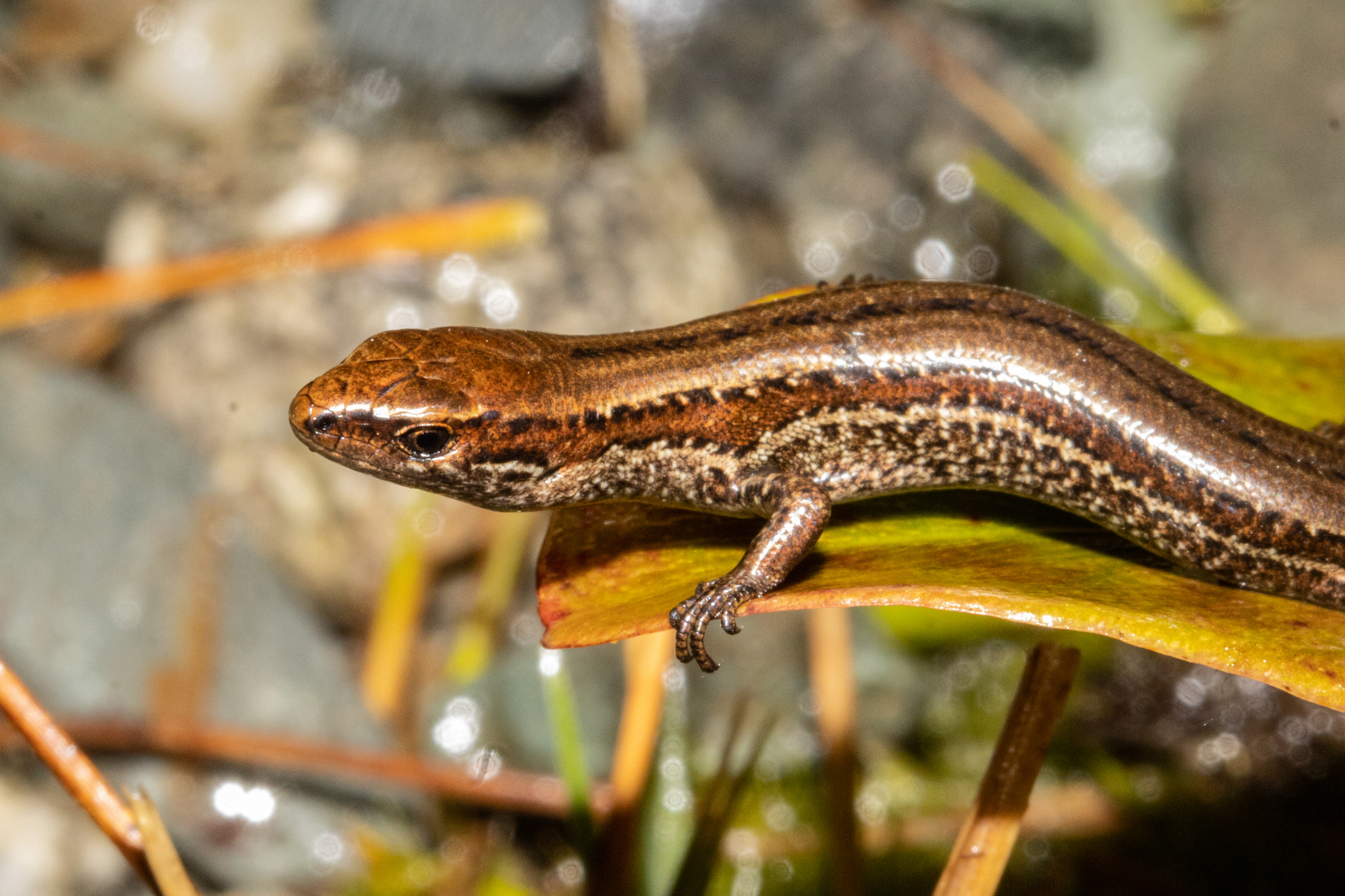
Techmarscincus jigurru is a small skink restricted to the cool, high-elevation rainforests of far north Queensland, Australia. Like other members of the Scincidae, it has a smooth, glossy, cylindrical body and short limbs, adaptations suited to moving through dense leaf litter and rocky microhabitats. It is likely a diurnal, ground-dwelling insectivore, foraging among rocks and forest debris for small invertebrates, and in turn serving as prey for birds and larger reptiles.
As a leaf-litter and saxicolous forager, it likely contributes to invertebrate population control and nutrient cycling within its forest habitat.
The species is endemic to the Bartle Frere massif and surrounding high-altitude areas, where it occupies subtropical and tropical moist lowland and montane forest, as well as rocky outcrops that provide shelter and thermal refuge. Its range is naturally limited, confined to specific elevational bands with cool, moist conditions.
The primary threats to this skink are habitat shifting and alteration, driven by changing climatic conditions at high elevation, and increasingly frequent droughts. Because the species depends on consistently cool, moist microhabitats, shifts in temperature and rainfall patterns can degrade the forest structure and rock-associated microclimates it relies on, with populations restricted to mountain summits having limited options to shift range further upslope.
Specific targeted conservation programs for this species are not well documented, though it likely benefits indirectly from the protected status of Wet Tropics forest areas, including World Heritage listing, which restricts broad-scale habitat clearing.
Population trends remain unknown, and no reliable abundance estimates exist. Given its narrow range and sensitivity to climatic change, its long-term outlook depends heavily on the stability of high-altitude forest conditions in the Wet Tropics region.
The Bartle Frere Cool-skink faces ongoing risks from its mountain-top habitat changing over time, likely as cooler high-altitude conditions shrink or shift due to a warming climate. It is also threatened by ongoing droughts, which can dry out the moist environment this species depends on. Both threats are currently ongoing and ongoing conditions like these are generally expected to intensify as climate patterns continue to change.
Habitat
Conservation measures underway
Other threatened species in SCINCIDAE

Threatened in Australia
Frequently asked questions
Why is Bartle Frere Cool-skink classified as Vulnerable?
Where does Bartle Frere Cool-skink live?
What are the main threats to Bartle Frere Cool-skink?
Get weekly conservation intelligence
One short digest a week of the most striking species and country data we ship, plus breaking conservation news paired with our database where it matters.
Free, no spam. One-click unsubscribe in every email.