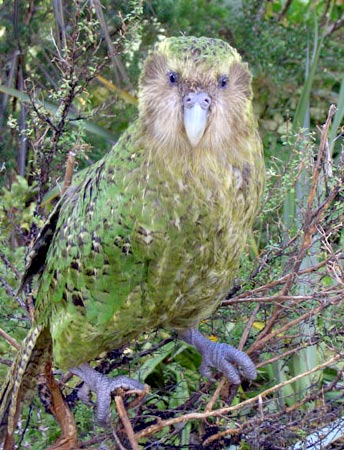
Kakapo
Strigops habroptilus
Photo: Photo: Wikimedia Commons, CC BY-SA
Overview
A detailed profile for this species is sourced from the IUCN Red List of Threatened Species as assessments become available.
The Owl Parrot faces severe threats from introduced mammalian predators, particularly stoats, cats, and rats, which prey on eggs, chicks, and adults of this flightless species. Habitat destruction from deforestation and human development has drastically reduced available nesting and foraging areas. The species' extremely slow reproductive rate, with females breeding only every 2-4 years when rimu fruit is abundant, makes population recovery exceptionally difficult.
Conservation measures underway
Other threatened species in STRIGOPIDAE


Threatened in New Zealand
Frequently asked questions
Why is Kakapo classified as Critically Endangered?
Where does Kakapo live?
What are the main threats to Kakapo?
Get weekly conservation intelligence
One short digest a week of the most striking species and country data we ship, plus breaking conservation news paired with our database where it matters.
Free, no spam. One-click unsubscribe in every email.