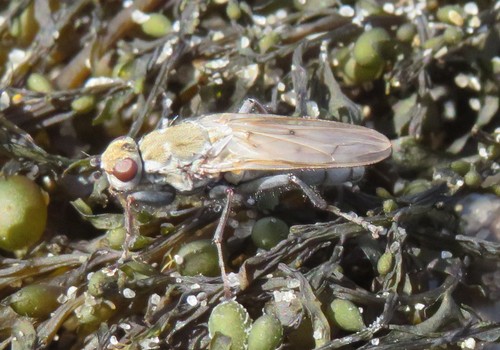
stor brunalgfluga
Helcomyza ustulata
Photo: Photo: (c) Bernd Bäumler, some rights reserved (CC BY-NC), uploaded by Bernd Bäumler
Overview
Helcomyza ustulata, commonly known as stor brunalgfluga, is a critically endangered dipteran species belonging to the family Helcomyzidae. This specialized fly is endemic to coastal regions of northern Europe, where it inhabits specific marine littoral environments. The species demonstrates a highly restricted distribution, making it particularly vulnerable to environmental changes and habitat degradation.
Its larvae develop in decomposing seaweed and organic matter along rocky shorelines, requiring specific salinity levels and substrate conditions for successful reproduction. The adult flies are typically found in close proximity to their larval habitat during the breeding season. The species faces significant threats from coastal development, pollution, and climate change impacts on marine ecosystems.
Rising sea levels and increased storm intensity associated with climate change pose particular risks to the narrow coastal zones where this species occurs. Additionally, human activities such as coastal construction, tourism infrastructure development, and pollution from marine sources contribute to habitat degradation. The removal or disturbance of seaweed deposits, which serve as critical breeding sites, further threatens population stability.
Conservation efforts for this species remain limited due to its recent recognition as critically endangered and the specialized nature of its habitat requirements. Research into population dynamics, distribution patterns, and specific ecological needs is essential for developing effective conservation strategies. Protection of coastal habitats and regulation of human activities in critical areas represent important conservation priorities for ensuring the species' survival.
The stor brunalgfluga faces primary threats from coastal development and habitat destruction along its narrow range of suitable shoreline environments. Climate change impacts, including sea level rise and increased storm intensity, threaten the specific coastal conditions required for the species' survival. Pollution and human disturbance of seaweed deposits that serve as essential breeding habitat further compromise population viability.
Habitat
This species inhabits coastal marine littoral zones along rocky shorelines in northern Europe. The larvae specifically require decomposing seaweed and organic matter deposits in intertidal areas with particular salinity and substrate conditions.
Threatened in Belgium


Frequently asked questions
Why is stor brunalgfluga classified as Critically Endangered?
Where does stor brunalgfluga live?
What are the main threats to stor brunalgfluga?
Get weekly conservation intelligence
One short digest a week of the most striking species and country data we ship, plus breaking conservation news paired with our database where it matters.
Free, no spam. One-click unsubscribe in every email.