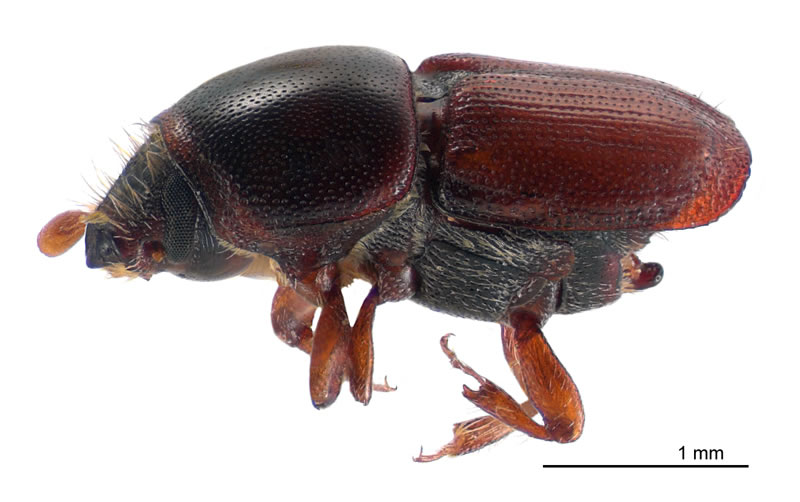
Elm Bark Beetle
Scolytus multistriatus
Photo: Wikimedia Commons (CC) via https://en.wikipedia.org/wiki/Scolytus_multistriatus
Overview
A small, cylindrical beetle typically 2–3.5 mm long, dark brown to black in coloration, Scolytus multistriatus belongs to the weevil family Curculionidae, within the bark beetle group. Adults bore into the bark of elm trees to lay eggs, and larvae create characteristic tunnel galleries beneath the bark as they feed. Critically, adult beetles act as the primary vector for Dutch elm disease, carrying fungal spores (Ophiostoma species) from infected to healthy trees during feeding.
Despite this damaging role, the species is a component of decomposer and wood-boring insect communities in temperate forests, contributing to nutrient cycling in dead and dying wood.
The species has a broad distribution across the Northern Hemisphere and has been introduced into parts of the Southern Hemisphere, with recorded populations in North America, Europe, Russia, and countries including Australia, New Zealand, Chile, and Argentina. It occupies terrestrial habitats wherever elm trees grow, including forests, woodlands, and urban plantings.
Population trends are not well quantified, but the species faces an unusual conservation dynamic: its own destructive relationship with Dutch elm disease has caused widespread die-off of its primary host trees, reducing available habitat. Additional pressures include urban development fragmenting elm stands, pesticide use targeting the beetle itself to slow disease spread, climate change altering elm distribution, and forest management practices that remove dead and dying wood the beetle depends on for breeding.
Conservation efforts are largely indirect, focused on elm disease management, breeding disease-resistant elm cultivars, and monitoring bark beetle populations as part of forest health programs. No targeted conservation initiatives exist for the beetle itself. Given its dependence on a declining host tree and its classification as vulnerable, its long-term population trajectory remains uncertain.
The elm bark beetle faces an unusual situation: the very disease it helps spread (Dutch elm disease) is killing off the mature elm trees it depends on for food and breeding sites, while cities cutting down infected trees and clearing land for development further shrinks its living space. It's also getting hit directly by pesticide sprays aimed at controlling disease-carrying beetles, and shifting weather patterns are changing where elm trees can even grow. Overall, these pressures appear to be ongoing and stable rather than rapidly worsening, though the beetle's fate remains closely tied to the health of dwindling elm populations.
Habitat
This bark beetle inhabits elm trees (Ulmus species) across temperate forests, urban parks, and woodland edges throughout Europe and introduced populations in North America. Adults bore into elm bark to create galleries for reproduction, requiring both healthy trees for feeding and stressed or dying elms for successful breeding.
Other threatened species in Curculionidae
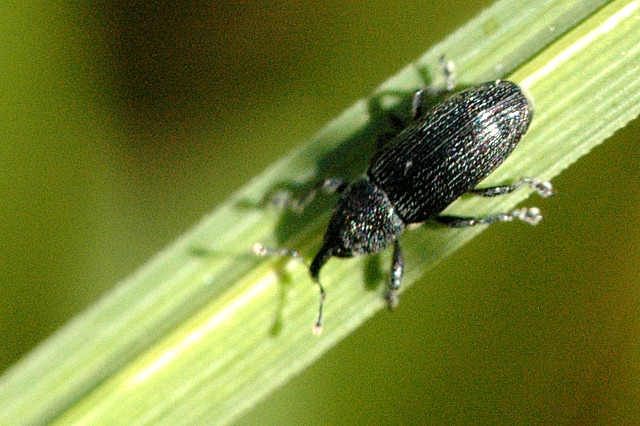

Threatened in Argentina

Frequently asked questions
Why is Elm Bark Beetle classified as Vulnerable?
Where does Elm Bark Beetle live?
What are the main threats to Elm Bark Beetle?
Get weekly conservation intelligence
One short digest a week of the most striking species and country data we ship, plus breaking conservation news paired with our database where it matters.
Free, no spam. One-click unsubscribe in every email.