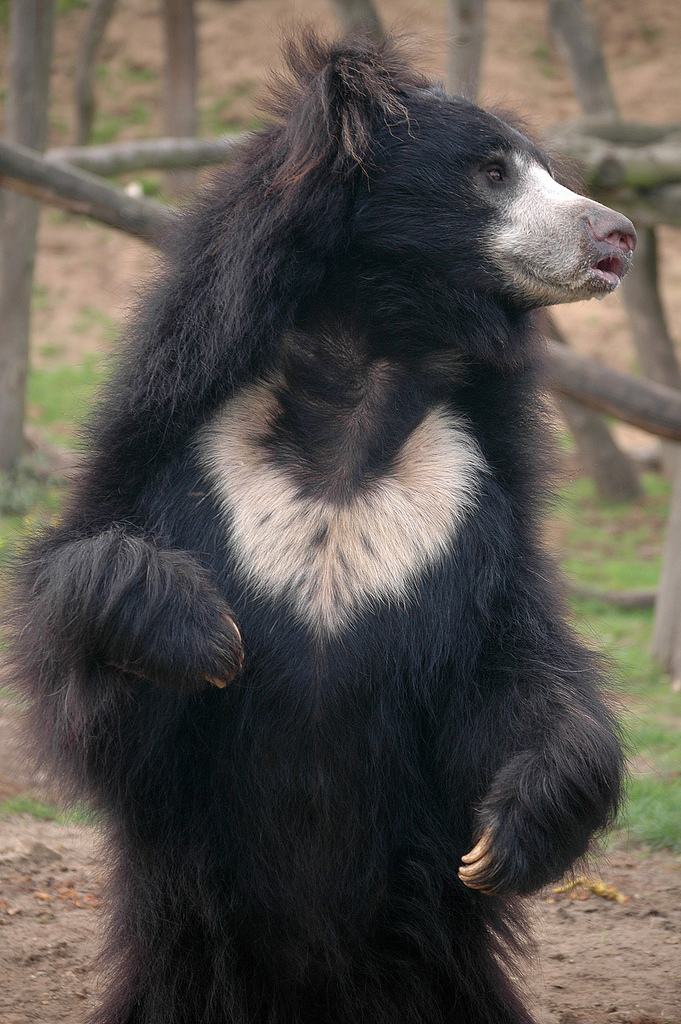
Sloth Bear
Melursus ursinus
Photo: Wikimedia Commons (CC) via https://en.wikipedia.org/wiki/Sloth_bear
Overview
Sloth Bear (Melursus ursinus)
The sloth bear is a medium-sized bear species distinguished by its shaggy black coat, prominent snout, and distinctive white V-shaped chest patch. Adults typically weigh 80-140 kg, with males being larger than females. These bears possess powerful claws and a specialized feeding apparatus, including a gap between their front teeth and an elongated lower lip, adaptations for their primary diet of termites and ants.
They use their strong claws to tear open termite mounds and ant nests, then vacuum up insects using their tube-like lips. Sloth bears also consume fruits, honey, and vegetation seasonally, playing an important role as seed dispersers in their ecosystems.
Sloth bears inhabit tropical forests across the Indian subcontinent, including India, Nepal, Bhutan, Bangladesh, Myanmar, and Sri Lanka. They prefer dry deciduous forests, grasslands, and scrublands at elevations up to 1,500 meters, though they also occupy tropical rainforests in some regions.
The species faces significant pressure from habitat fragmentation due to agricultural expansion, particularly crop cultivation, and livestock ranching. Mining operations and road construction further fragment their remaining habitat. Direct threats include hunting for body parts used in traditional medicine and the illegal wildlife trade. Human-bear conflicts arise when bears raid crops or encounter people in degraded habitats.
Conservation efforts include protected area establishment, anti-poaching patrols, and community-based programs addressing human-wildlife conflict. Several countries have implemented bear rescue and rehabilitation centers.
With continuing habitat loss and fragmentation across their range, the species' population trend remains declining, though some protected populations show stability where conservation measures are effectively implemented.
Sloth bears face multiple ongoing threats including the clearing of forests for farming and logging, expansion of roads and railways that fragment their habitat, and mining operations that destroy their natural areas. They are also hunted and trapped by humans, often in conflict situations when bears raid crops or encounter livestock. All of these threats are currently ongoing with no clear indication they are decreasing.
Habitat
Conservation measures underway
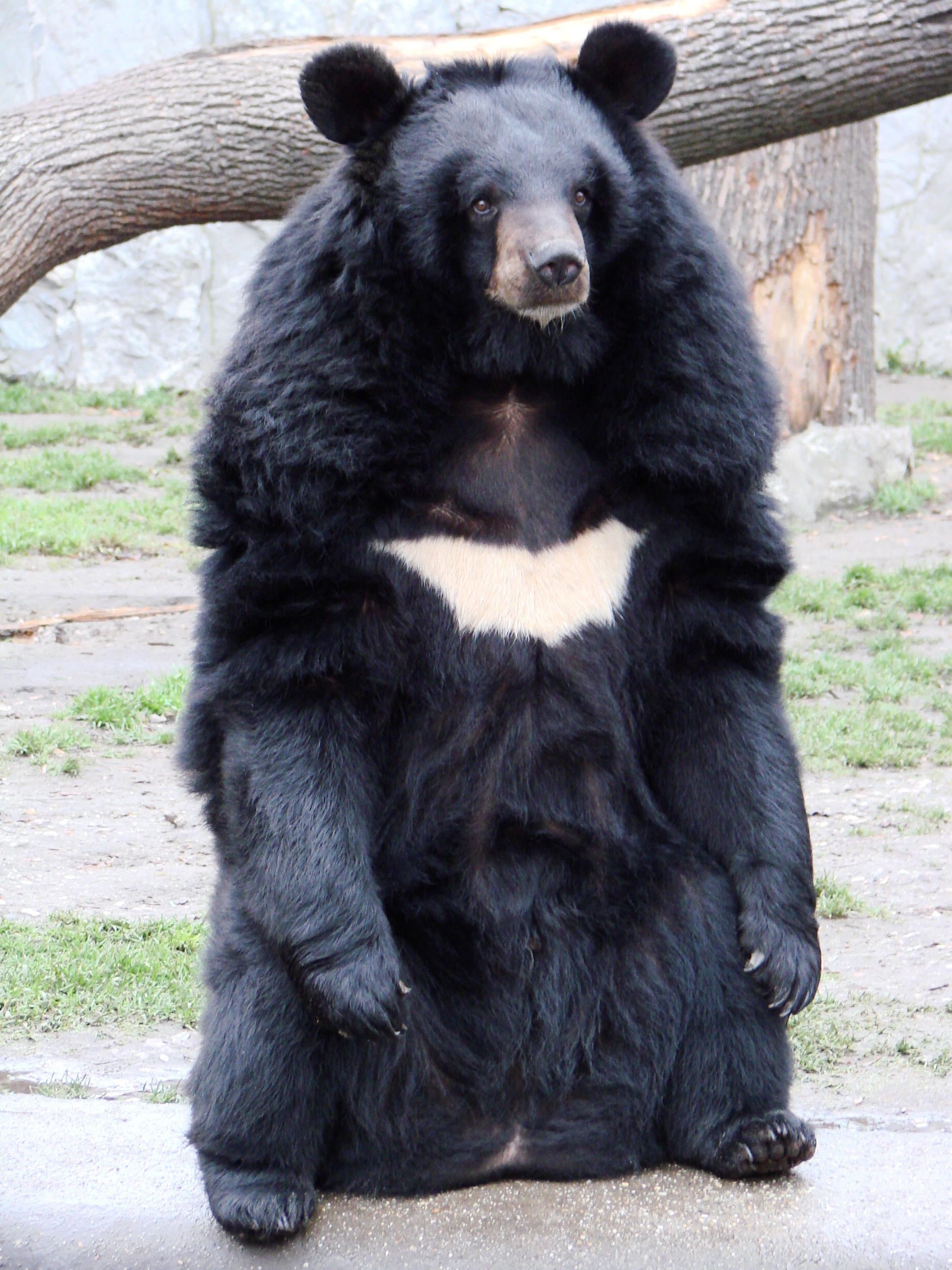
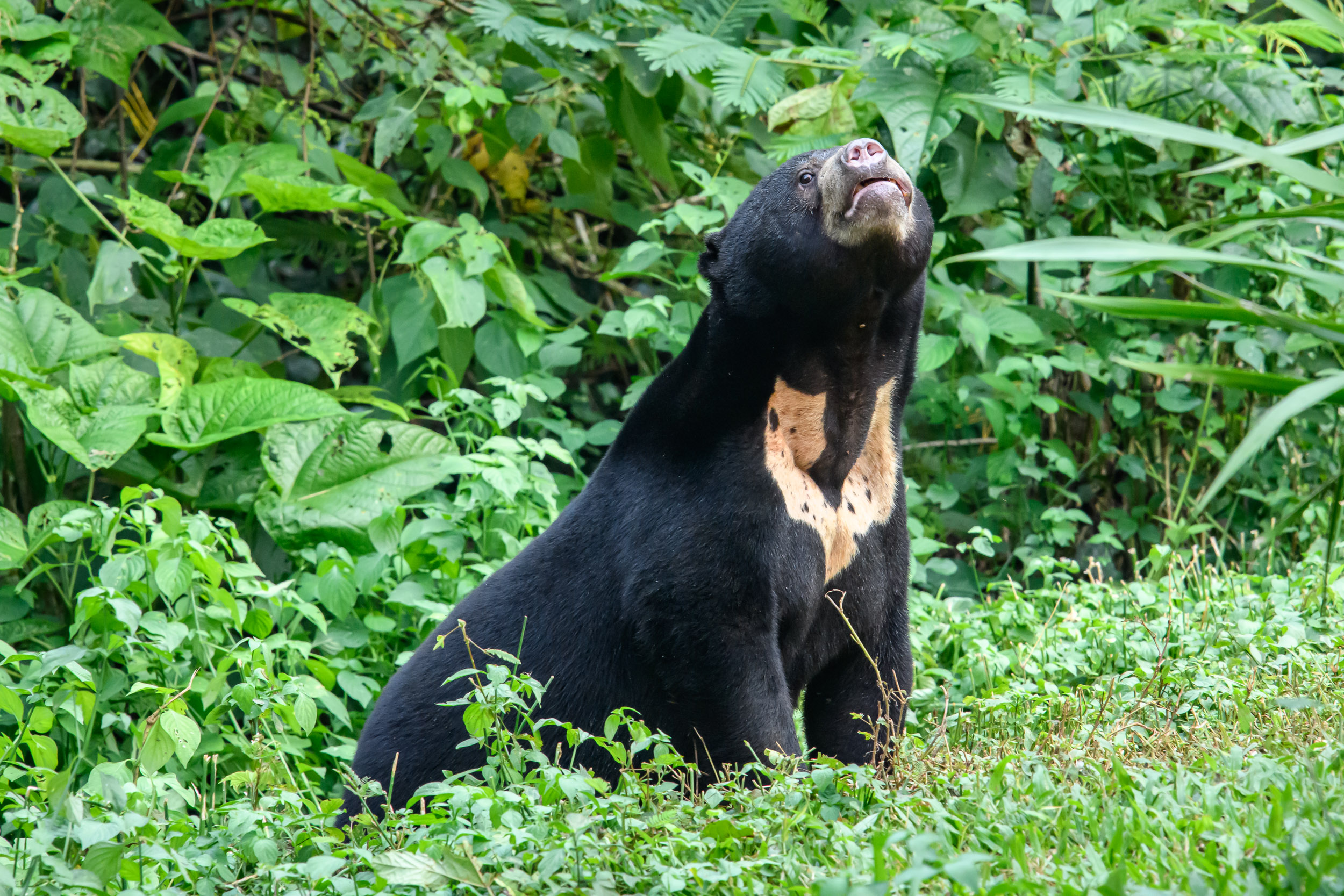
Other threatened species in URSIDAE


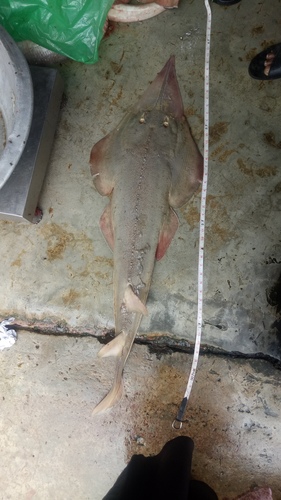
Threatened in Bangladesh



Frequently asked questions
Why is Sloth Bear classified as Vulnerable?
Where does Sloth Bear live?
What are the main threats to Sloth Bear?
Get weekly conservation intelligence
One short digest a week of the most striking species and country data we ship, plus breaking conservation news paired with our database where it matters.
Free, no spam. One-click unsubscribe in every email.