
Silky Shark
Carcharhinus falciformis
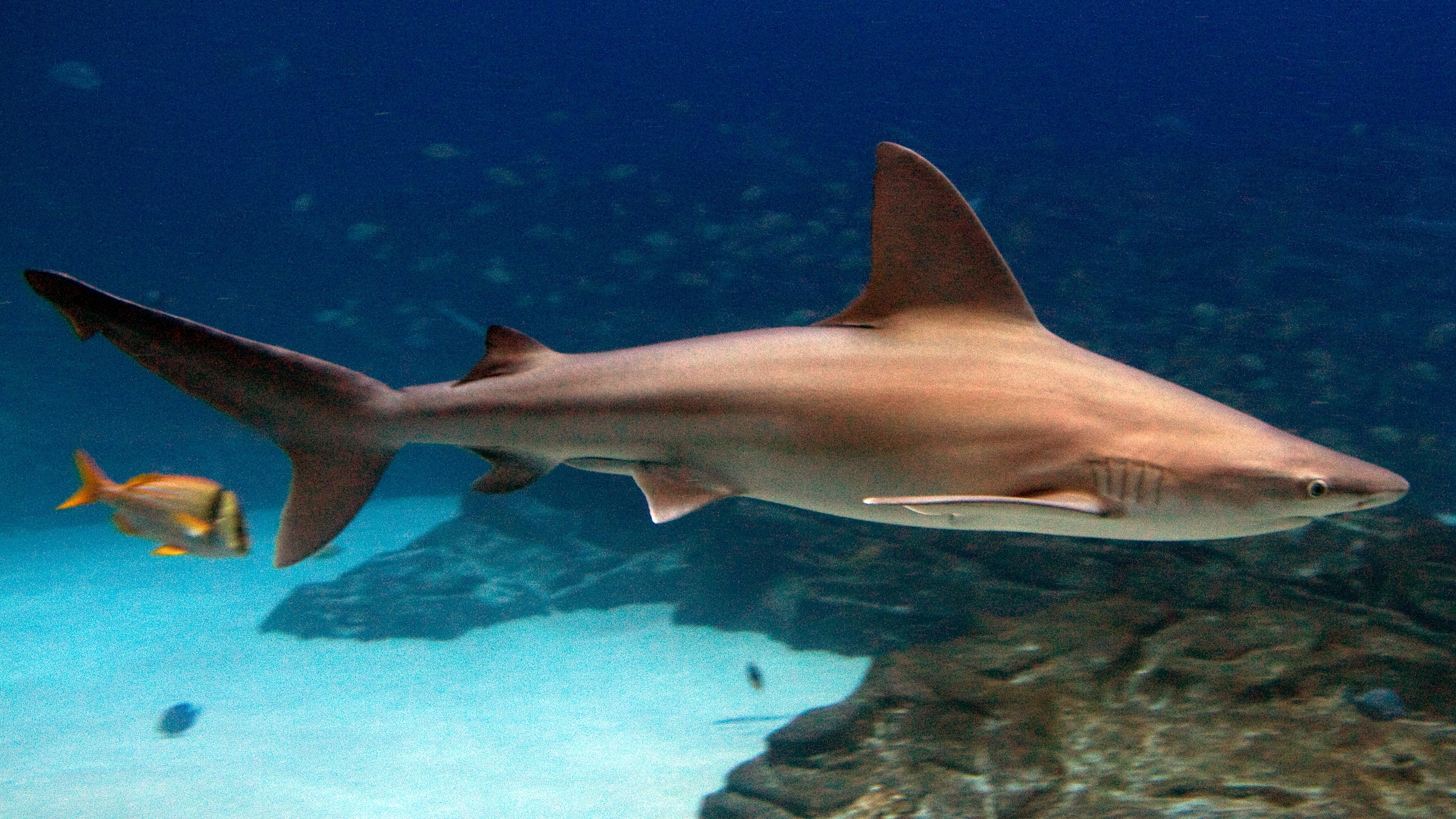
Photo: Wikimedia Commons (CC) via https://en.wikipedia.org/wiki/Silky_shark
Overview
Carcharhinus falciformis is a slender, fast-swimming shark named for the sickle-like curvature of its fins. It typically reaches lengths of up to 3.5 meters and is recognized by its long pectoral fins, small first dorsal fin, and countershaded gray-to-bronze body. Highly mobile and often found in large aggregations, it is an active predator of bony fishes, cephalopods, and occasionally crustaceans, playing a role in regulating prey populations in open-ocean food webs.
It is also known to associate with schools of tuna, a behavior that has significant implications for its interaction with commercial fisheries.
This species has a circumtropical distribution, inhabiting marine oceanic, neritic, and coastal waters across nearly every ocean basin. It is recorded in well over a hundred countries and territories, including the United States, Mexico, Brazil, Australia, Indonesia, the Philippines, and numerous island and coastal nations throughout the Indo-Pacific, Atlantic, and Caribbean regions.
The species is classified as Vulnerable, with a decreasing population trend. The primary threat is fishing and harvesting of aquatic resources, as the species is frequently caught as both target catch and bycatch in longline and purse-seine fisheries, particularly those targeting tuna. Its fins are also valued in international trade.
Conservation measures include regional fisheries management organization catch limits, finning bans, and listing under CITES Appendix II, which regulates international trade in its parts. Some countries have also implemented shark sanctuaries within their waters.
Given continued high fishing pressure across much of its range and the species' relatively slow reproductive rate, its population is expected to continue declining unless management measures are more broadly enforced and adopted.
Silky Sharks are primarily threatened by ongoing commercial and artisanal fishing, both as a deliberate target for their fins and meat and as accidental bycatch in nets and longlines set for other species like tuna. This constant fishing pressure across their ocean habitat is the main danger they face. This threat remains ongoing and shows no signs of easing.
Habitat
Conservation measures underway
Other threatened species in CARCHARHINIDAE

Threatened in Algeria



Frequently asked questions
Why is Silky Shark classified as Vulnerable?
Where does Silky Shark live?
What are the main threats to Silky Shark?
Get weekly conservation intelligence
One short digest a week of the most striking species and country data we ship, plus breaking conservation news paired with our database where it matters.
Free, no spam. One-click unsubscribe in every email.