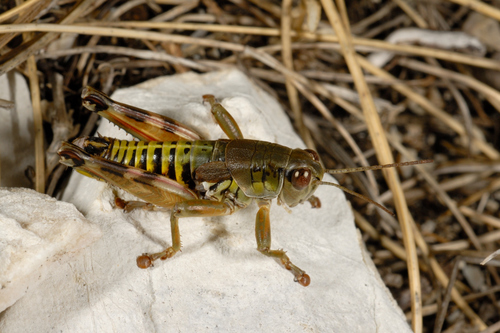
Sibillini Mountain Grasshopper
Podisma silvestrii
Photo: (c) Roberto Sindaco, some rights reserved (CC BY-NC-SA), uploaded by Roberto Sindaco
Overview
Podisma silvestrii is a critically endangered grasshopper species endemic to the Italian Alps. This flightless orthopteran belongs to the family Acrididae and is characterized by its reduced wing development, making it unable to fly and highly dependent on localized habitat conditions. The species inhabits high-altitude alpine grasslands and rocky slopes, typically found at elevations above 1,500 meters in specific mountain regions of northern Italy.
Its limited dispersal ability due to flightlessness makes it particularly vulnerable to environmental changes and habitat fragmentation. The primary threats to Podisma silvestrii include climate change, which is causing upward shifts in vegetation zones and reducing suitable alpine habitat. Tourism and recreational activities in alpine areas contribute to habitat disturbance, while grazing pressure from livestock can alter the grassland structure essential for the species' survival.
The species' extremely restricted range and small population size make it highly susceptible to local extinctions. Conservation efforts focus on habitat protection within existing protected areas and monitoring of remaining populations. Research initiatives aim to better understand the species' ecological requirements and population dynamics to inform targeted conservation strategies.
The preservation of traditional extensive grazing practices that maintain optimal grassland conditions is considered crucial for the species' long-term survival. Continued monitoring and habitat management are essential to prevent further population decline of this endemic alpine grasshopper.
Podisma silvestrii faces severe threats from climate change, which is reducing suitable high-altitude alpine habitat as vegetation zones shift upward. Additional pressures include habitat disturbance from tourism and recreational activities, along with changes in traditional grazing practices that alter the grassland structure required for the species' survival.
Habitat
This species inhabits high-altitude alpine grasslands and rocky slopes in the Italian Alps, typically occurring above 1,500 meters elevation. It requires specific microhabitat conditions within these alpine environments, including appropriate vegetation structure and composition.
Conservation measures underway
Other threatened species in ACRIDIDAE
Threatened in Italy
Frequently asked questions
Why is Sibillini Mountain Grasshopper classified as Critically Endangered?
Where does Sibillini Mountain Grasshopper live?
What are the main threats to Sibillini Mountain Grasshopper?
Get weekly conservation intelligence
One short digest a week of the most striking species and country data we ship, plus breaking conservation news paired with our database where it matters.
Free, no spam. One-click unsubscribe in every email.