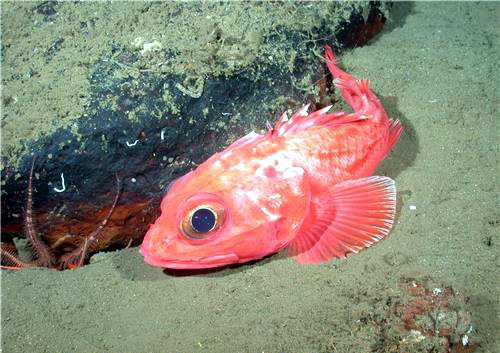
Sebastolobus alascanus
Photo: Wikimedia Commons (CC) via https://en.wikipedia.org/wiki/Shortspine_thornyhead
Overview
A detailed profile for this species is sourced from the IUCN Red List of Threatened Species as assessments become available.
Sebastolobus alascanus faces severe population decline primarily due to intensive commercial fishing pressure, particularly from bottom trawling operations that target this species in deep Pacific waters. The species' extremely slow growth rate and late sexual maturity make it highly vulnerable to overfishing, as populations cannot recover quickly from exploitation. Climate change is altering deep-sea temperature and oxygen conditions in its habitat range, potentially affecting prey availability and reproductive success.
Habitat
This deep-sea rockfish inhabits continental slope waters of the North Pacific, typically found at depths between 25-1,500 meters over rocky bottoms and muddy substrates. The species occurs from the Bering Sea south to central California, preferring cooler deep waters with temperatures ranging from 2-9°C.
Other threatened species in SCORPAENIDAE
Threatened in Canada
Frequently asked questions
Why is Sebastolobus alascanus classified as Endangered?
Where does Sebastolobus alascanus live?
What are the main threats to Sebastolobus alascanus?
Get weekly conservation intelligence
One short digest a week of the most striking species and country data we ship, plus breaking conservation news paired with our database where it matters.
Free, no spam. One-click unsubscribe in every email.