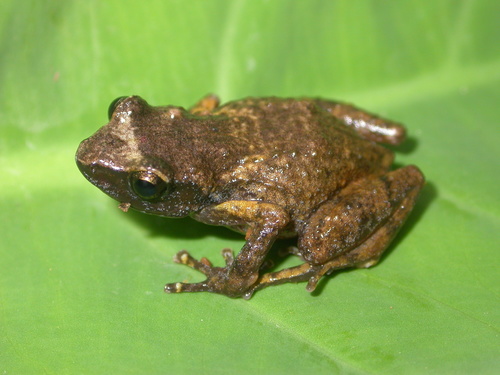
Short-legged Streamside Frog
Eleutherodactylus rivularis
Overview
Eleutherodactylus rivularis is a small frog species endemic to Puerto Rico, belonging to the diverse genus of direct-developing frogs known as coquís. This species inhabits montane forests in the central mountainous regions of the island, where it occupies a specialized ecological niche along streams and in riparian vegetation. Unlike many amphibians, E.
rivularis undergoes direct development, with eggs hatching directly into miniature frogs rather than passing through a tadpole stage. The species faces severe population declines that have led to its classification as Critically Endangered by the IUCN. Primary threats include habitat destruction from deforestation and urban development, climate change impacts affecting montane forest ecosystems, and potential disease pressures including chytridiomycosis, a fungal infection that has devastated amphibian populations worldwide.
The species' restricted range and specialized habitat requirements make it particularly vulnerable to environmental changes. Stream pollution and alterations to watershed hydrology further compound these pressures. Conservation efforts focus on habitat protection within existing protected areas and forest reserves in Puerto Rico's central mountains.
Research initiatives aim to better understand the species' ecology, population status, and specific conservation needs. Captive breeding programs may be necessary if wild populations continue to decline. The preservation of intact montane forest ecosystems and maintenance of water quality in mountain streams are critical for the species' long-term survival.
Eleutherodactylus rivularis faces severe threats from habitat destruction due to deforestation and urban development in Puerto Rico's mountainous regions. Climate change and potential fungal diseases further threaten the remaining populations. Stream pollution and watershed alterations compound these pressures on this specialized riparian species.
Habitat
This species inhabits montane forests in Puerto Rico's central mountains, specifically occupying areas along streams and in riparian vegetation. It requires intact forest ecosystems with clean water sources and appropriate microhabitat conditions for reproduction and survival.
Conservation measures underway
Other threatened species in ELEUTHERODACTYLIDAE

Threatened in Cuba
Frequently asked questions
Why is Short-legged Streamside Frog classified as Critically Endangered?
Where does Short-legged Streamside Frog live?
What are the main threats to Short-legged Streamside Frog?
Get weekly conservation intelligence
One short digest a week of the most striking species and country data we ship, plus breaking conservation news paired with our database where it matters.
Free, no spam. One-click unsubscribe in every email.