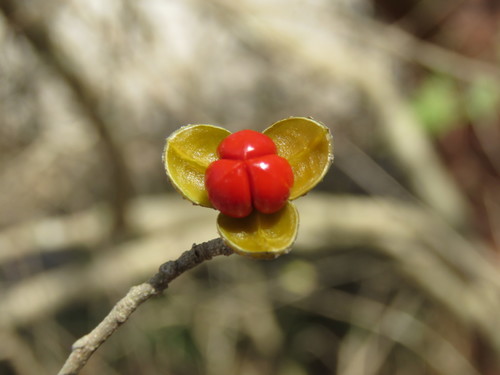
Trichilia trifolia
Photo: Photo: (c) Alexis López Hernández, some rights reserved (CC BY), uploaded by Alexis López Hernández
Overview
A detailed profile for this species is sourced from the IUCN Red List of Threatened Species as assessments become available.
Serashi faces severe population declines primarily due to widespread deforestation and habitat fragmentation across its native range in tropical America. Agricultural expansion, urban development, and logging activities have significantly reduced available habitat, while remaining populations are increasingly isolated and vulnerable to local extinctions.
Habitat
Serashi occurs in tropical moist lowland forests, secondary forests, and forest edges from sea level to approximately 1,200m elevation. The species is also found in gallery forests along rivers and occasionally in disturbed areas adjacent to primary forest.
Other threatened species in Meliaceae
Frequently asked questions
Why is Trichilia trifolia classified as Critically Endangered?
Where does Trichilia trifolia live?
What are the main threats to Trichilia trifolia?
Get weekly conservation intelligence
One short digest a week of the most striking species and country data we ship, plus breaking conservation news paired with our database where it matters.
Free, no spam. One-click unsubscribe in every email.