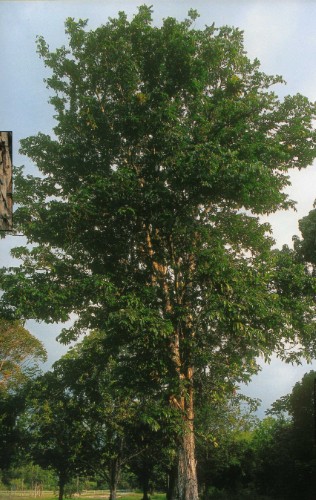
Crabwood
Carapa guianensis
Photo: Wikimedia Commons (CC) via https://en.wikipedia.org/wiki/Carapa_guianensis
Overview
Carapa guianensis is a species of tree in the family Meliaceae, also known by the common names andiroba or crabwood.
Crabwood faces significant pressure from widespread deforestation and habitat fragmentation across its Neotropical range, driven by agricultural expansion, logging operations, and urban development. The species is particularly vulnerable due to its slow growth rate and dependence on intact forest ecosystems, making population recovery difficult once local extinctions occur.
Habitat
Crabwood occurs in tropical rainforests, moist lowland forests, and gallery forests throughout the Amazon Basin and Guianas, typically in well-drained soils from sea level to approximately 800m elevation. The species is also found in secondary forests and forest edges, though it reaches highest densities in primary forest habitats.
Other threatened species in Meliaceae
Frequently asked questions
Why is Crabwood classified as Vulnerable?
Where does Crabwood live?
What are the main threats to Crabwood?
Get weekly conservation intelligence
One short digest a week of the most striking species and country data we ship, plus breaking conservation news paired with our database where it matters.
Free, no spam. One-click unsubscribe in every email.