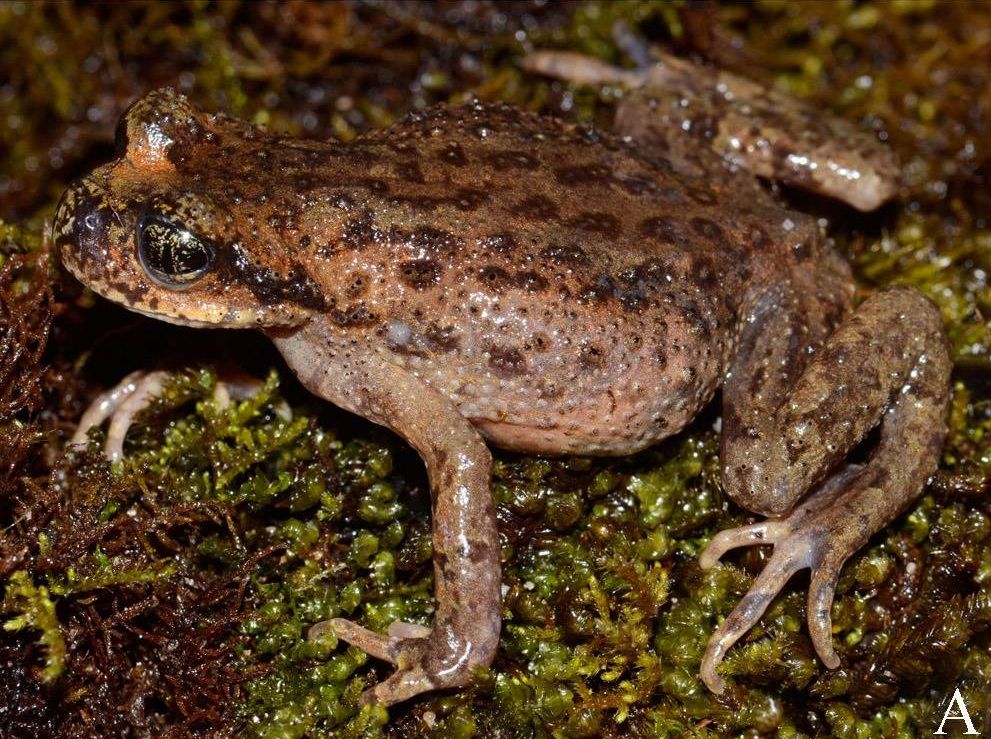
Spiny Lazy Toad
Scutiger spinosus
Photo: Wikimedia Commons (CC) via https://en.wikipedia.org/wiki/Scutiger_spinosus
Overview
Scutiger spinosus, commonly known as the spiny lazy toad, is a critically endangered amphibian species endemic to high-altitude regions of the Tibetan Plateau and surrounding mountain ranges in China. This distinctive toad belongs to the family Megophryidae and is characterized by its robust build and the presence of spiny projections on its skin, which give the species its common name. The species inhabits alpine environments at elevations typically above 3,000 meters, where it has adapted to harsh conditions including extreme temperature fluctuations and intense UV radiation.
Scutiger spinosus breeds in shallow alpine pools, streams, and temporary water bodies formed by snowmelt during the brief summer months. The species faces severe population declines due to multiple anthropogenic pressures affecting its fragile high-altitude ecosystem. Climate change poses a particularly significant threat, as rising temperatures alter the hydrology of breeding sites and shift suitable habitat to higher elevations where available space is limited.
Additionally, infrastructure development, including road construction and mining activities in the region, has resulted in habitat fragmentation and degradation. Livestock grazing and trampling around breeding sites further compromise water quality and habitat integrity. Conservation efforts for this species remain limited, though some populations occur within protected areas.
Research initiatives focus on population monitoring and habitat assessment to better understand the species' ecological requirements and inform future conservation strategies.
Scutiger spinosus faces primary threats from climate change, which alters breeding site hydrology and forces habitat shifts to increasingly limited high-elevation areas. Infrastructure development, mining, and livestock grazing contribute to habitat fragmentation and degradation of critical breeding environments.
Habitat
This species inhabits high-altitude alpine environments above 3,000 meters on the Tibetan Plateau and surrounding mountains. It breeds in shallow alpine pools, streams, and temporary water bodies created by seasonal snowmelt.
Conservation measures underway
Other threatened species in MEGOPHRYIDAE
Threatened in Bhutan


Frequently asked questions
Why is Spiny Lazy Toad classified as Critically Endangered?
Where does Spiny Lazy Toad live?
What are the main threats to Spiny Lazy Toad?
Get weekly conservation intelligence
One short digest a week of the most striking species and country data we ship, plus breaking conservation news paired with our database where it matters.
Free, no spam. One-click unsubscribe in every email.