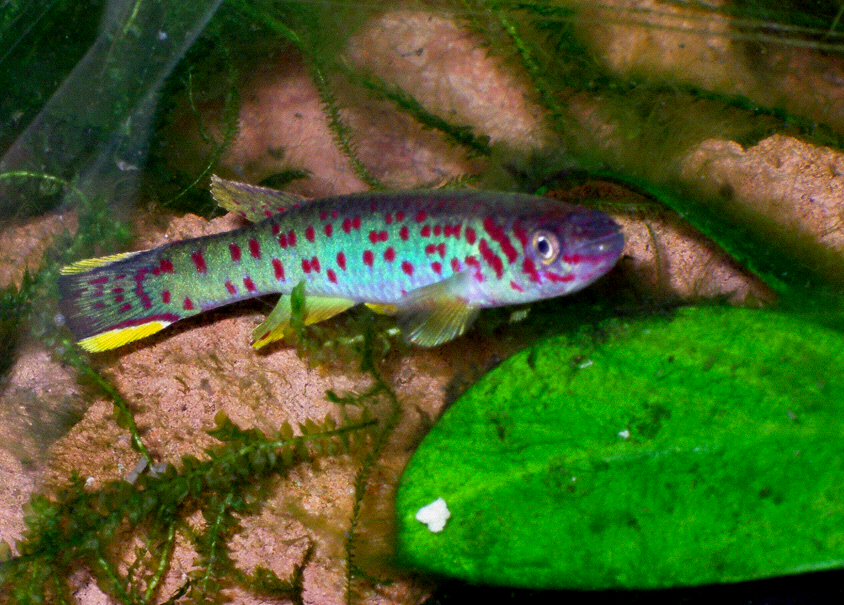
Fundulopanchax scheeli
Photo: Wikimedia Commons (CC) via https://en.wikipedia.org/wiki/Fundulopanchax_scheeli
Overview
Fundulopanchax scheeli is a small freshwater killifish endemic to Cameroon in Central Africa. This species belongs to the family Nothobranchiidae and is characterized by its vibrant coloration and relatively small size, typically reaching lengths of 4-6 centimeters. The species inhabits seasonal pools, temporary wetlands, and shallow freshwater environments within a very restricted geographic range in Cameroon's coastal and inland regions.
Like many killifish species, F. scheeli has adapted to environments that experience periodic drying, with eggs capable of surviving drought conditions in substrate until water returns. The species is currently classified as Critically Endangered by the IUCN, reflecting severe threats to its survival and extremely limited distribution.
Primary threats include habitat destruction due to agricultural expansion, urban development, and infrastructure projects that eliminate or degrade the temporary wetland systems essential for the species' lifecycle. Water pollution from agricultural runoff and domestic waste further compromises remaining habitat quality. Climate change poses additional risks by altering precipitation patterns that affect the seasonal flooding cycles these fish depend upon.
The species' restricted range makes it particularly vulnerable to local extinctions. Conservation efforts for F. scheeli remain limited, though some specimens are maintained in aquarium collections by specialized hobbyists, which may serve as insurance populations.
Habitat protection and restoration of seasonal wetland systems within the species' native range are critical for preventing extinction, along with continued monitoring of remaining wild populations.
Fundulopanchax scheeli faces severe threats from habitat destruction caused by agricultural expansion, urban development, and infrastructure projects that eliminate the temporary wetland systems it requires. Water pollution from agricultural runoff and domestic waste degrades remaining habitat quality. Climate change threatens to disrupt the seasonal flooding patterns essential for the species' survival.
Habitat
This species inhabits seasonal pools, temporary wetlands, and shallow freshwater environments in Cameroon. These habitats experience periodic drying cycles, with the fish adapted to survive drought conditions through drought-resistant eggs that remain viable in substrate until water returns.
Conservation measures underway
Other threatened species in NOTHOBRANCHIIDAE
Threatened in Germany
Frequently asked questions
Why is Fundulopanchax scheeli classified as Critically Endangered?
Where does Fundulopanchax scheeli live?
What are the main threats to Fundulopanchax scheeli?
Get weekly conservation intelligence
One short digest a week of the most striking species and country data we ship, plus breaking conservation news paired with our database where it matters.
Free, no spam. One-click unsubscribe in every email.