Cape Melville Shade-skink
Saproscincus saltus
Overview
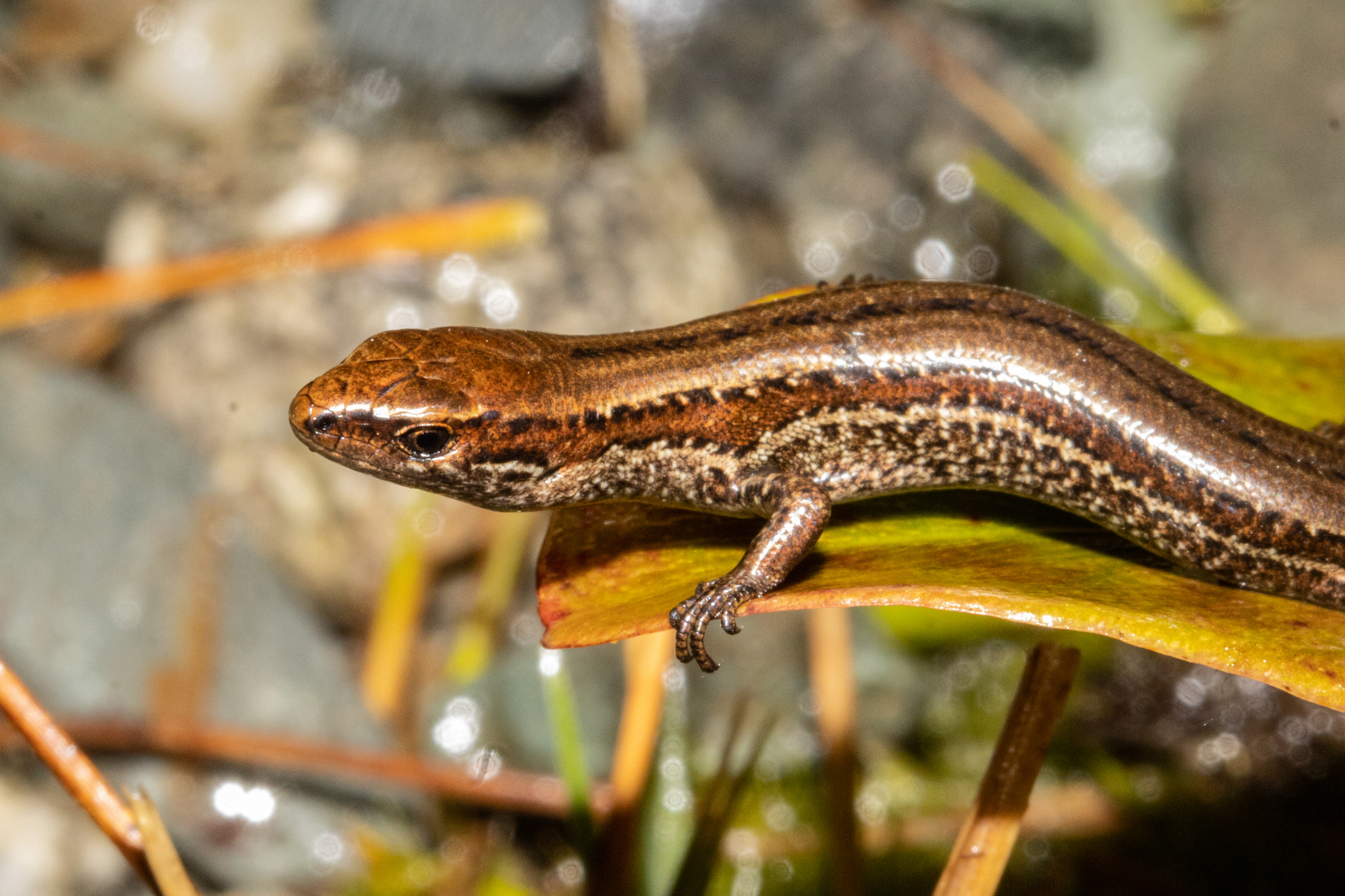
Saproscincus saltus is a small, ground-dwelling skink characterised by a slender body, smooth glossy scales, and cryptic brown to reddish colouration that provides camouflage among leaf litter and rock crevices. Like other members of its genus, it is likely a shade-loving, insectivorous species, foraging in the cool, moist microhabitats of the forest floor and rocky outcrops. Individuals are typically secretive and rely on cover to avoid predators, playing a role in local invertebrate population control and serving as prey for birds and larger reptiles.
This species is endemic to Australia, restricted to the Cape Melville region of northeastern Queensland. It inhabits subtropical and tropical moist lowland forest, often in association with rocky areas such as boulder fields and rainforest-clad granite outcrops, where humidity and shade remain relatively stable.
Its restricted range makes it inherently vulnerable to environmental change. Habitat shifting and alteration, likely linked to changing climatic conditions affecting rainforest moisture regimes and vegetation structure, pose an ongoing threat, particularly given the specialised microhabitat requirements of rock-associated skinks. An additional unspecified threat is also recognised as ongoing, though its precise nature is not well documented.
The species' narrow distribution limits its capacity to withstand localised disturbance.
Conservation measures specific to this species are not well documented, though it likely benefits indirectly from the protected status of Cape Melville National Park, which encompasses much of its known range and restricts broader land-use pressures.
Population trends remain unknown due to limited monitoring data. Given its restricted range and sensitivity to habitat change, the species' long-term outlook depends on the stability of its rainforest and rocky habitat, warranting continued monitoring and targeted research to clarify population status and specific threat mechanisms.
The Cape Melville Shade-skink faces ongoing changes to its rocky rainforest habitat, likely linked to shifting climate conditions and weather patterns in its isolated mountain range home, along with other unspecified pressures that are not fully understood. Because this species lives in such a small, restricted area, even gradual environmental changes could have an outsized impact on its survival. Current evidence suggests these threats are ongoing and stable, though limited data makes it difficult to say whether they are intensifying.
Habitat
Conservation measures underway
Other threatened species in SCINCIDAE

Threatened in Australia
Frequently asked questions
Why is Cape Melville Shade-skink classified as Vulnerable?
Where does Cape Melville Shade-skink live?
What are the main threats to Cape Melville Shade-skink?
Get weekly conservation intelligence
One short digest a week of the most striking species and country data we ship, plus breaking conservation news paired with our database where it matters.
Free, no spam. One-click unsubscribe in every email.