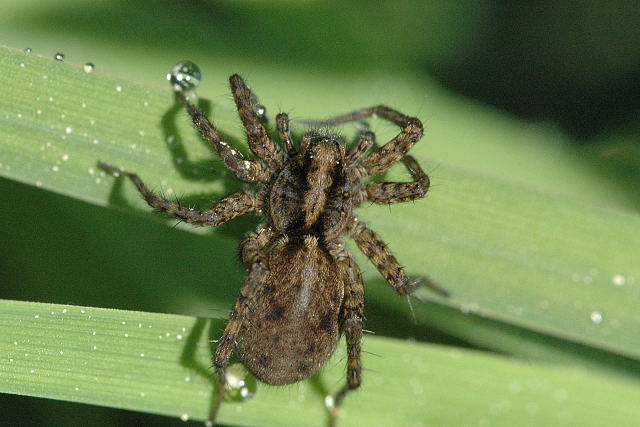
Pardosa agricola
Photo: Wikimedia Commons (CC) via https://en.wikipedia.org/wiki/Pardosa_agricola
Overview
Pardosa agricola is a wolf spider species in the genus Pardosa found from Europe to Kazakhstan.
The ruigtewolfspin (Pardosa agricola) faces severe population declines due to intensive agricultural practices that destroy its specialized habitat requirements. Agricultural intensification, pesticide use, and habitat fragmentation have dramatically reduced suitable breeding and foraging areas across its range, pushing remaining populations to critically low levels.
Habitat
Inhabits agricultural field margins, wet meadows, and the edges of cultivated areas with adequate ground moisture and vegetation cover. Requires areas with sufficient prey availability and suitable microhabitats for web construction and overwintering.
Other threatened species in Lycosidae

Threatened in Afghanistan

Frequently asked questions
Why is Pardosa agricola classified as Critically Endangered?
Where does Pardosa agricola live?
What are the main threats to Pardosa agricola?
Get weekly conservation intelligence
One short digest a week of the most striking species and country data we ship, plus breaking conservation news paired with our database where it matters.
Free, no spam. One-click unsubscribe in every email.