
Ravenea musicalis
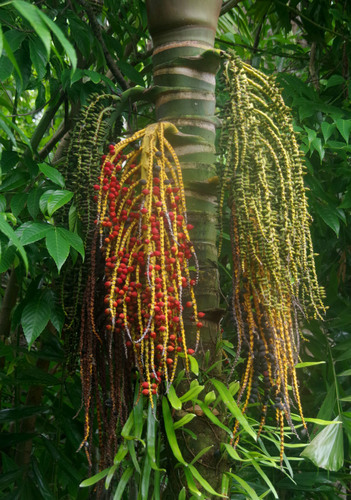
Photo: (c) Louis Aureglia, some rights reserved (CC BY), uploaded by Louis Aureglia
Overview
Ravenea musicalis, or the river palm, is a species of flowering plant in the family Arecaceae. Also known by the Antanosy word "torendriky", meaning "submerged trunk", R. musicalis is known for being the only truly aquatic palm tree.
Like many mangrove trees, R. musicalis seeds germinate within the fruit, and the seedling takes root underwater, as much as 2.5 m (8 ft) below the surface, so that it spends its early years completely under water. Endemic to Madagascar, R.
musicalis was first discovered in 1993 by Henk Beentje on an expedition funded by the McDonald's restaurant. although of course it was ethnoknown by the Antanosy People for centuries. This palm is listed in the IUCN Red List.
This tree is harvested by local people primarily for building material and food. Over-harvesting, habitat degradation and habitat loss threaten the remaining populations. Horticulturalists prize R.
musicalis for its rarity and unique life history.
Ravenea musicalis faces severe threats from deforestation and agricultural expansion in Madagascar's remaining lowland rainforests. The species' extremely limited range makes it particularly vulnerable to habitat fragmentation, while collection pressure for the horticultural trade has further reduced wild populations. Climate change poses an additional long-term threat through altered precipitation patterns affecting the moist forest conditions this palm requires.
Habitat
Ravenea musicalis is endemic to the lowland rainforests of eastern Madagascar, typically found in moist, well-drained soils within primary forest understory. The species requires the humid microclimate conditions of intact forest canopy and is particularly associated with areas near streams and valleys.
Conservation measures underway
Other threatened species in ARECACEAE
Threatened in Madagascar

Frequently asked questions
Why is Ravenea musicalis classified as Critically Endangered?
Where does Ravenea musicalis live?
What are the main threats to Ravenea musicalis?
Get weekly conservation intelligence
One short digest a week of the most striking species and country data we ship, plus breaking conservation news paired with our database where it matters.
Free, no spam. One-click unsubscribe in every email.