
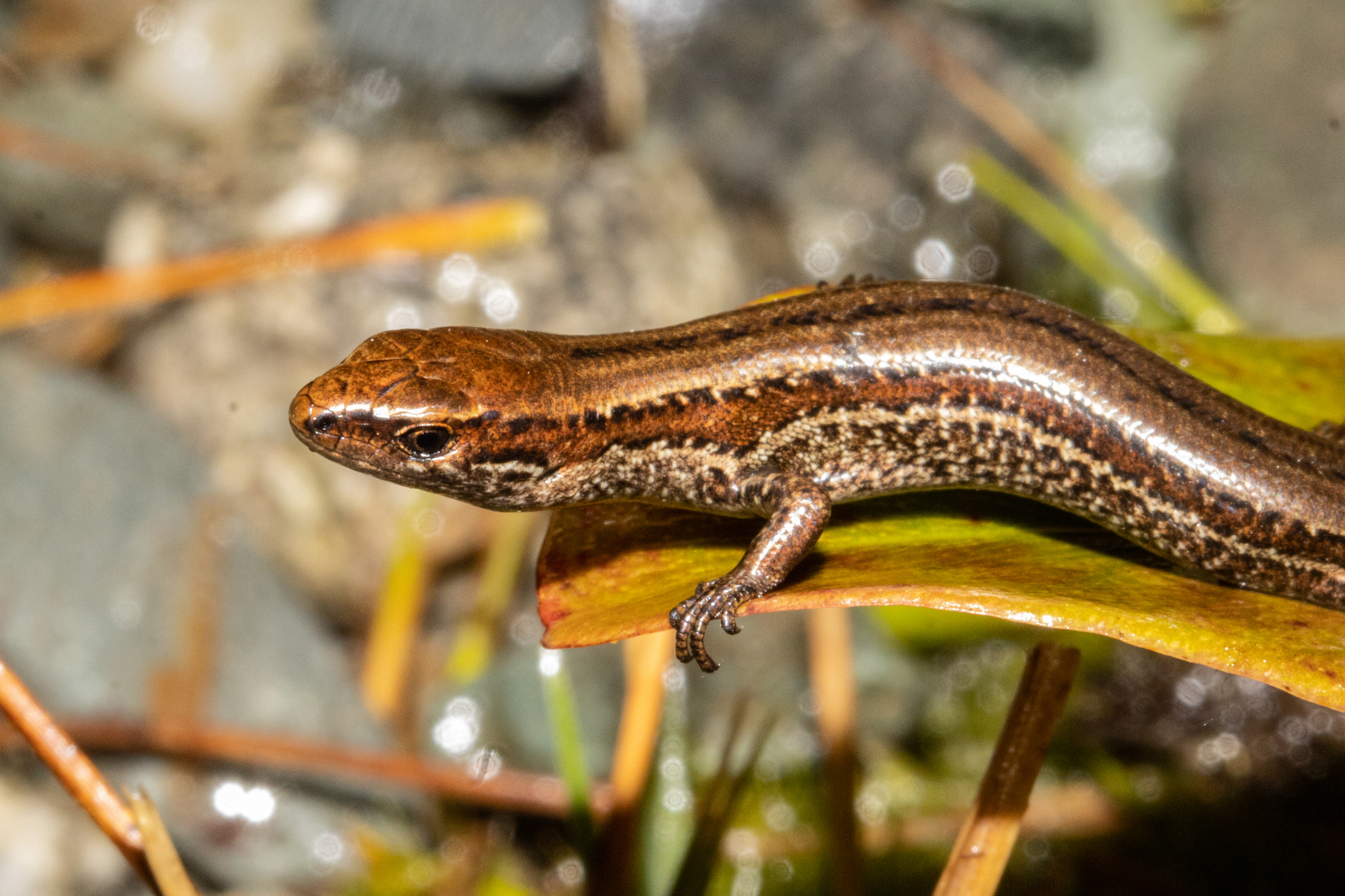
Pygmy Blue-tongue Lizard
Tiliqua adelaidensis
Photo: Wikimedia Commons (CC) via https://en.wikipedia.org/wiki/Adelaide_pygmy_blue-tongue_skink
Overview
One of Australia's smallest skink species, this lizard rarely exceeds 10 centimetres in length and is distinguished by a short, stumpy blue tongue used in defensive displays. It is notable for an unusual life history among reptiles: individuals occupy vertical burrows originally excavated by trapdoor or wolf spiders, using these refuges for shelter, ambush hunting of invertebrate prey, and basking at the burrow entrance. This sedentary, sit-and-wait strategy makes it highly dependent on the availability of suitable burrows within its habitat.
The species is endemic to South Australia, confined to a small number of remnant native grassland patches on the Adelaide Plains and surrounding regions. It was long presumed extinct until its rediscovery in 1992, and known populations remain highly fragmented and geographically restricted.
Its decline stems from the loss and degradation of native grassland habitat. Conversion of land for annual and perennial cropping, expansion of housing and urban development, and infrastructure such as roads and railroads have all fragmented remaining habitat. Water management and dam construction have altered local hydrology affecting grassland condition, while broader ecosystem modifications, including changes in grazing regimes and loss of the spider burrows the species relies on, have further reduced habitat suitability.
Conservation efforts include habitat protection and management at known sites, translocation trials to establish new populations, research into artificial burrow supplementation, and land-use planning measures intended to limit further habitat clearance in areas of known occurrence.
Population trends remain in decline, and the species continues to be classified as Endangered. Its restricted range, reliance on a specific and diminishing habitat resource, and ongoing landscape-level pressures indicate that its long-term security remains uncertain without sustained habitat protection.
The Pygmy Blue-tongue Lizard faces ongoing habitat loss and disruption from roads and railways being built through its grassland home, farmland expansion for crops, and new housing developments taking over its territory. Changes to water systems and other alterations to the natural landscape are further degrading the small, fragmented patches of grassland it depends on for survival, particularly the spider burrows it uses for shelter. These threats appear to be stable but persistent, continuing to chip away at the limited habitat this species has left.
Conservation measures underway
Other threatened species in SCINCIDAE

Threatened in Australia
Frequently asked questions
Why is Pygmy Blue-tongue Lizard classified as Endangered?
Where does Pygmy Blue-tongue Lizard live?
What are the main threats to Pygmy Blue-tongue Lizard?
Get weekly conservation intelligence
One short digest a week of the most striking species and country data we ship, plus breaking conservation news paired with our database where it matters.
Free, no spam. One-click unsubscribe in every email.