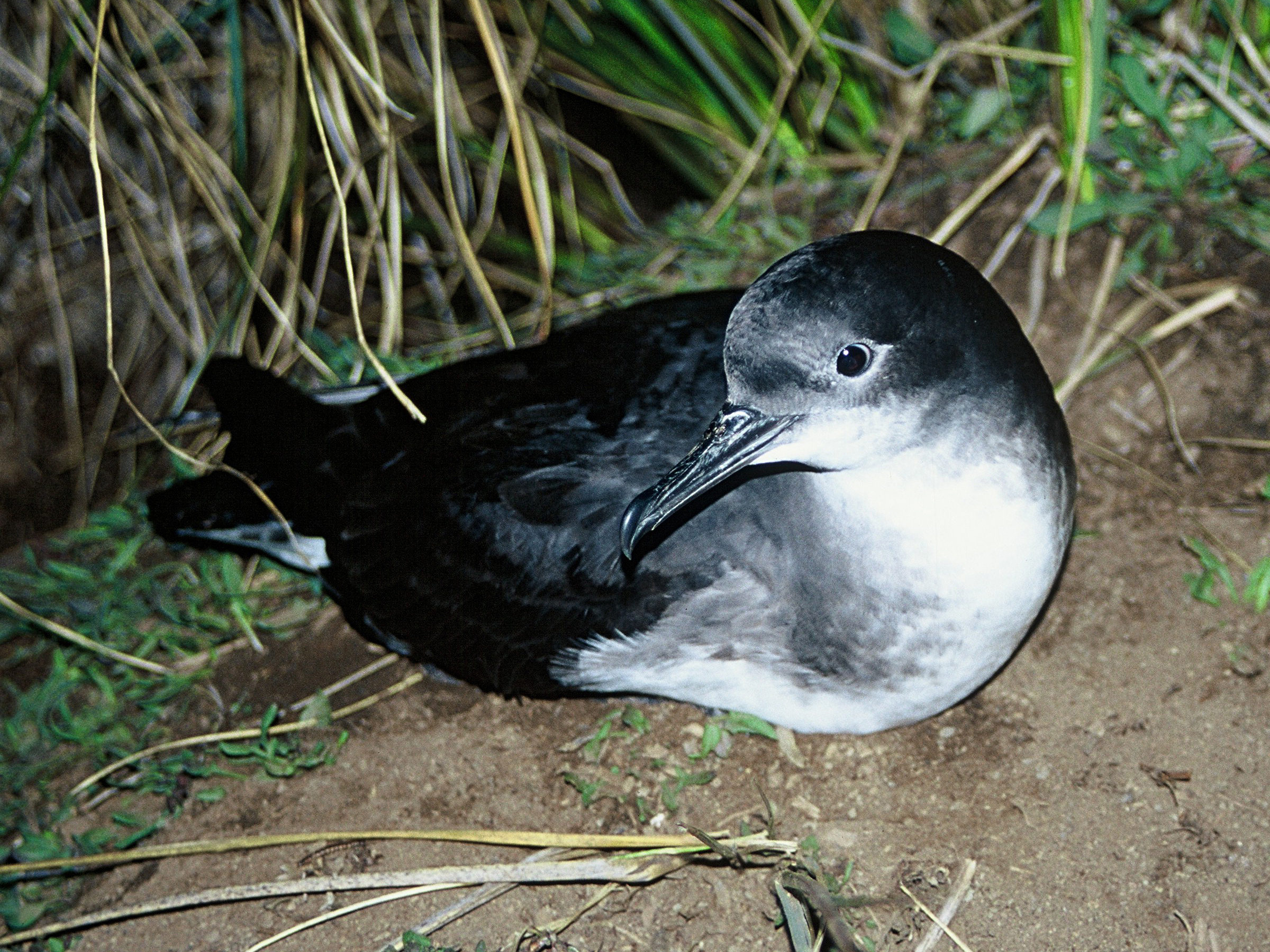
Hutton's Shearwater
Puffinus huttoni
Photo: Wikimedia Commons (CC) via https://en.wikipedia.org/wiki/Hutton's_shearwater
Overview
Puffinus huttoni is a medium-sized seabird in the family Procellariidae, identifiable by its dark brownish-grey upperparts, pale underparts, and long, narrow wings adapted for dynamic soaring over open ocean. Like other shearwaters, it spends most of its life at sea, coming ashore only to breed, and forages by plunge-diving and pursuit-diving for small fish and krill. As a marine predator, it contributes to nutrient cycling between pelagic and terrestrial systems, particularly through guano deposition at breeding colonies.
The species breeds exclusively in the Seaward Kaikōura Range of New Zealand's South Island, nesting in high-altitude burrows in tussock grassland, an unusual habitat for a shearwater. Outside the breeding season, individuals disperse across the Tasman Sea and into Australian waters, relying on marine neritic zones for foraging.
Threats include predation by introduced mammals such as stoats and pigs at nesting colonies, habitat degradation from erosion and vegetation loss linked to shifting land use and historical logging, disturbance from artificial lighting that disorients fledglings, and incidental bycatch in fisheries. Pollution of unspecified origin also affects marine foraging habitat.
Conservation measures include predator-proof fencing around key colonies, translocation of chicks to establish new, safer breeding sites, and ongoing monitoring of population trends. Habitat restoration efforts aim to stabilize burrow sites against erosion.
The population is currently assessed as stable, reflecting the success of active management rather than an absence of pressure. Continued vigilance regarding invasive predators, fisheries interactions, and coastal light pollution remains necessary to maintain this trajectory, given the species' restricted breeding range and vulnerability to localized disturbances.
Hutton's Shearwater faces serious dangers from predators like introduced rats, stoats, and cats that hunt them and their chicks, along with the loss of their mountain nesting burrows due to forest clearing and shifting habitat conditions. They also suffer from artificial lights and noise that disorient them, unclear pollution impacts, and accidental deaths from fishing activities at sea. These threats are ongoing and show no sign of easing, suggesting a stable but persistent level of risk to the species.
Habitat
Conservation measures underway
Other threatened species in PROCELLARIIDAE
Threatened in Australia
Frequently asked questions
Why is Hutton's Shearwater classified as Endangered?
Where does Hutton's Shearwater live?
What are the main threats to Hutton's Shearwater?
Get weekly conservation intelligence
One short digest a week of the most striking species and country data we ship, plus breaking conservation news paired with our database where it matters.
Free, no spam. One-click unsubscribe in every email.