Pritchardia limahuliensis
Overview
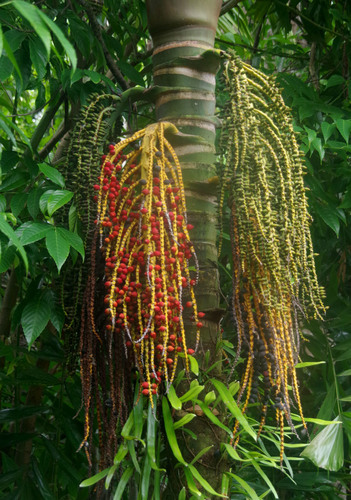
Pritchardia limahuliensis, the Limahuli Valley pritchardia, is a palm native to Hawaii. It is a rare species, only discovered in 1977 by staff of the National Tropical Botanical Garden in the Limahuli Garden and Preserve, Kauai, Hawaii, where it is now being conserved. It is threatened by introduced rats, which eat the seeds.
Pritchardia limahuliensis faces severe threats from invasive plant species that outcompete native vegetation and alter soil conditions in its limited habitat. Feral ungulates, particularly pigs and goats, damage the forest understory and trample seedlings, preventing natural regeneration. The species' extremely restricted range on Kauai makes it highly vulnerable to stochastic events such as hurricanes, landslides, or disease outbreaks that could eliminate entire subpopulations.
Habitat
This critically endangered palm is endemic to the wet forests of Limahuli Valley on the Hawaiian island of Kauai, where it grows in steep, rocky terrain at elevations between 200-600 meters. The species requires the humid, sheltered conditions of native Hawaiian mesic to wet forest ecosystems with well-drained volcanic soils.
Other threatened species in ARECACEAE
Frequently asked questions
Why is Pritchardia limahuliensis classified as Critically Endangered?
Where does Pritchardia limahuliensis live?
What are the main threats to Pritchardia limahuliensis?
Get weekly conservation intelligence
One short digest a week of the most striking species and country data we ship, plus breaking conservation news paired with our database where it matters.
Free, no spam. One-click unsubscribe in every email.