Pritchardia affinis
Overview
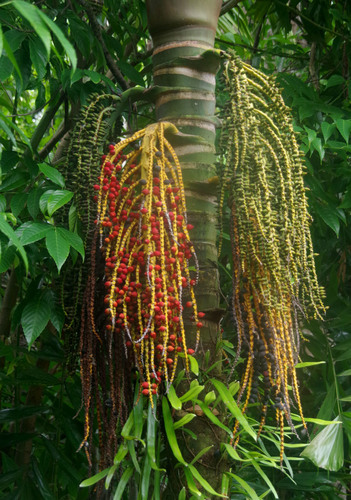
Pritchardia affinis, the Hawaiʻi pritchardia, is a species of palm tree that is endemic to the Hawaiian Islands. Wild populations currently exist on the leeward side of the Island of Hawaiʻi. It was most likely cultivated by Native Hawaiians, its exact native range is uncertain.
P. affinis reaches a height of 10–25 m (33–82 ft). It is threatened by pests such as rats and pigs, which damage trees and eat the seeds before they can grow.
It is a federally listed endangered species of the United States. The fruit of Pritchardia affinis was reportedly the preferred food of the now-extinct ula-ai-hawane—a niche that has been seemingly filled by the introduced lavender waxbill.
Pritchardia affinis faces severe population decline due to habitat destruction from urban development and agricultural expansion across its limited Hawaiian range. Invasive plant species compete aggressively with native palms for resources, while introduced ungulates like feral pigs damage root systems and seedlings through trampling and rooting behavior. The species' extremely restricted distribution makes it particularly vulnerable to localized threats and environmental disturbances.
Habitat
This endemic Hawaiian palm inhabits dry to mesic forests and coastal areas on volcanic slopes, typically growing in well-drained soils at elevations from sea level to approximately 600 meters. The species prefers partially shaded understory environments within native Hawaiian forest ecosystems.
Conservation measures underway
Other threatened species in ARECACEAE
Frequently asked questions
Why is Pritchardia affinis classified as Critically Endangered?
Where does Pritchardia affinis live?
What are the main threats to Pritchardia affinis?
Get weekly conservation intelligence
One short digest a week of the most striking species and country data we ship, plus breaking conservation news paired with our database where it matters.
Free, no spam. One-click unsubscribe in every email.