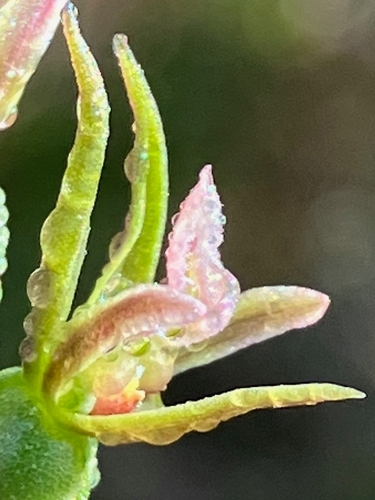
Lax Leek Orchid
Prasophyllum laxum
Photo: Photo: (c) suburpy, some rights reserved (CC BY-NC)
Overview
This terrestrial orchid produces a single tubular leaf and a slender flowering spike bearing small, densely clustered green and reddish-brown flowers typical of the genus Prasophyllum. Like other members of this group, it relies on specific pollinators, likely small insects, for reproduction, and may form associations with mycorrhizal fungi in the soil, a relationship essential for germination and growth in most terrestrial orchids. As with many leek orchids, individual plants can remain dormant underground for extended periods, only emerging and flowering under favourable conditions.
The species is restricted to forested habitats in Australia, occurring in a limited geographic range that contributes to its high extinction risk. Its narrow distribution and specific habitat requirements mean that even localized disturbances can have disproportionate effects on the population.
The species faces ongoing pressure from livestock farming and ranching, which can degrade understory vegetation and soil conditions necessary for orchid persistence. Mining and quarrying operations pose a direct threat through habitat destruction and landscape alteration, while logging and wood harvesting reduce forest cover and disrupt the microhabitat conditions, including leaf litter and canopy shade, that the orchid depends on.
Conservation attention for this species is consistent with broader efforts in Australia to protect threatened terrestrial orchids, which typically include habitat protection measures, monitoring of known populations, and research into mycorrhizal associations to support potential propagation programs. Specific site protections may apply where populations are known.
Given its Critically Endangered status and the continuation of habitat-degrading activities across its range, the species' population trend remains in decline. Without effective mitigation of these ongoing threats, its long-term survival in the wild remains uncertain.
The Lax Leek Orchid is mainly threatened by land being used for grazing livestock, ongoing mining and quarrying operations, and the cutting down of trees for timber, all of which can damage or destroy the plant's natural habitat. These activities disturb the soil and vegetation the orchid depends on to survive. All three threats are currently ongoing, suggesting the pressure on this species remains steady rather than easing.
Habitat
Conservation measures underway
Other threatened species in ORCHIDACEAE
Threatened in Australia
Frequently asked questions
Why is Lax Leek Orchid classified as Critically Endangered?
Where does Lax Leek Orchid live?
What are the main threats to Lax Leek Orchid?
Get weekly conservation intelligence
One short digest a week of the most striking species and country data we ship, plus breaking conservation news paired with our database where it matters.
Free, no spam. One-click unsubscribe in every email.