
Pavona cactus
Photo: Wikimedia Commons (CC) via https://en.wikipedia.org/wiki/Pavona_cactus
Overview
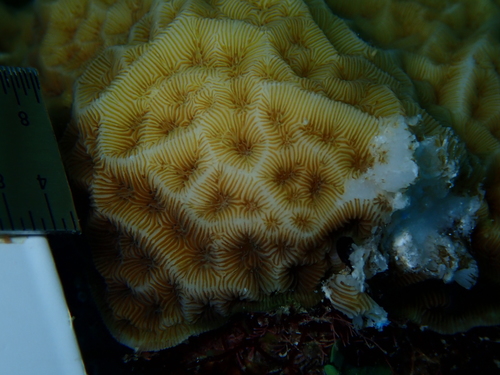
Pavona cactus is a reef-building coral in the family Agariciidae, recognizable by its distinctive foliaceous to bifacial laminar growth form, with thin, contorted, leaf-like or plate-like fronds that often bear a ridged, corrugated surface texture. Colonies can form extensive stands in shallow reef environments. Like other scleractinian corals, it relies on a symbiotic relationship with photosynthetic zooxanthellae housed within its tissues, which provide the majority of its energy needs, while the coral itself extends calcium carbonate skeleton that contributes to reef framework structure.
This structural role supports habitat complexity for numerous reef-associated fish and invertebrate species.
The species has an exceptionally wide distribution across the Indo-Pacific and into the western Indian Ocean and Red Sea, occurring in marine neritic waters from East Africa and the Red Sea through South and Southeast Asia, Australia, and across the Pacific island nations to as far east as French Polynesia. It typically inhabits shallow reef slopes, lagoons, and reef flats.
The species faces pressure from destructive fishing and harvesting practices that damage reef substrate, coral disease outbreaks and predation by problematic native species such as crown-of-thorns starfish, habitat alteration linked to shifting environmental conditions including warming-driven bleaching events, and unspecified pollution impacts affecting water quality.
Conservation efforts affecting this species are largely indirect, occurring through Marine Protected Areas across its range, international trade regulation under CITES, and broader reef monitoring and restoration initiatives. No species-specific management programs are documented.
Population trends are decreasing, consistent with broader regional declines in reef-building coral cover. Without mitigation of cumulative reef stressors, continued decline is anticipated.
Pavona cactus coral faces ongoing pressure from fishing and harvesting activities that damage reefs, along with harm from native pests, predators, or diseases that attack coral colonies. Its habitat is also being altered as ocean conditions shift, and pollution from unclear or unrecorded sources adds further stress. These combined threats appear to be ongoing and persistent rather than easing, suggesting a stable but continuing level of risk to the species.
Habitat
Conservation measures underway
Other threatened species in AGARICIIDAE

Threatened in American Samoa
Frequently asked questions
Why is Pavona cactus classified as Vulnerable?
Where does Pavona cactus live?
What are the main threats to Pavona cactus?
Get weekly conservation intelligence
One short digest a week of the most striking species and country data we ship, plus breaking conservation news paired with our database where it matters.
Free, no spam. One-click unsubscribe in every email.