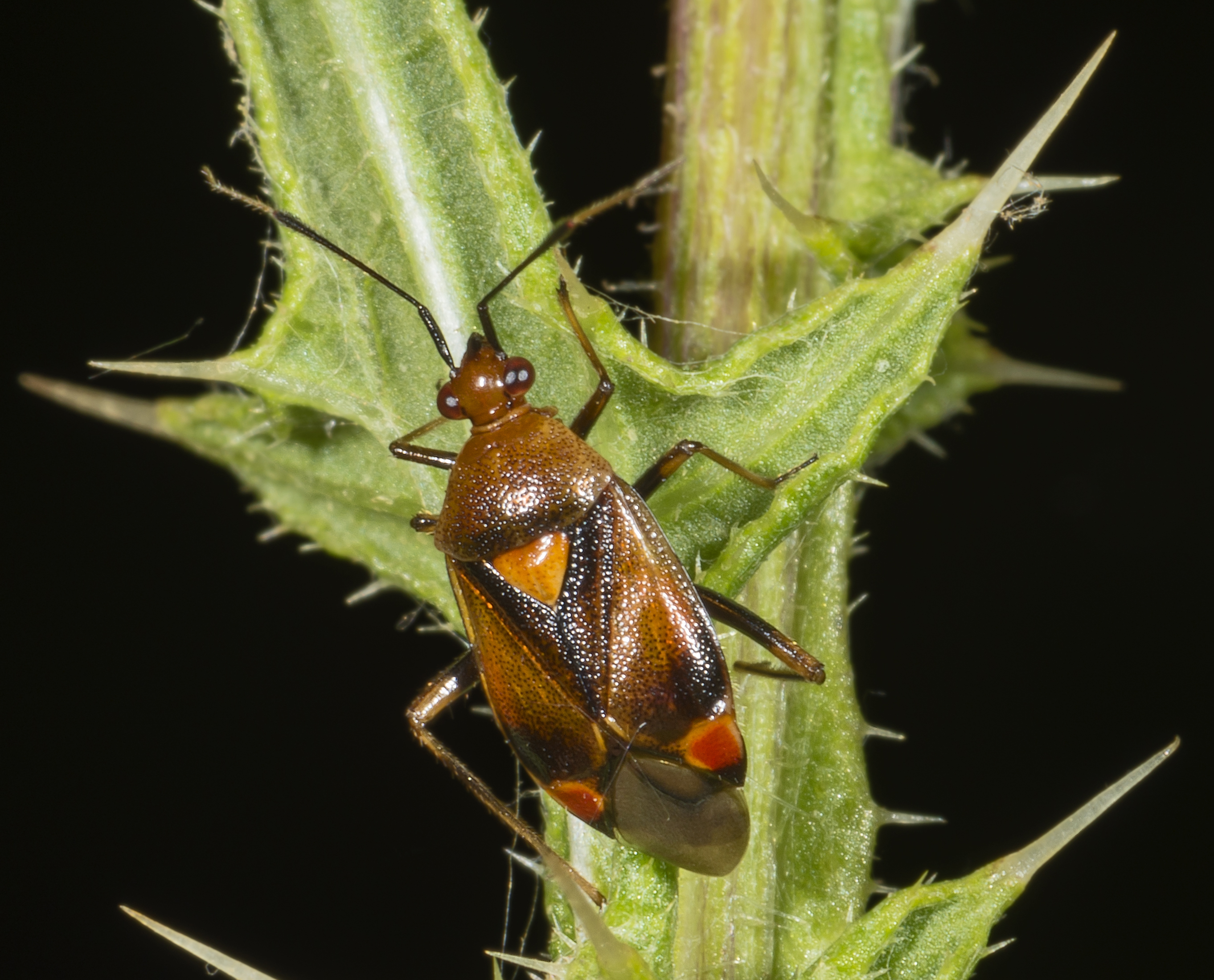
Plant bug
Deraeocoris ruber
Photo: Wikimedia Commons (CC) via https://en.wikipedia.org/wiki/Deraeocoris_ruber
Overview
Deraeocoris ruber, commonly known as the red-spotted plant bug, is a species of bug in the family Miridae.
The Plant bug (Deraeocoris ruber) faces severe population declines due to habitat loss from agricultural intensification and urban development, which destroys the diverse plant communities it depends on for feeding and reproduction. Climate change further threatens this species by altering the phenology of its host plants and disrupting the delicate ecological relationships essential for its survival.
Habitat
This species inhabits diverse herbaceous plant communities including semi-natural grasslands, field margins, gardens, and areas with mixed vegetation where it feeds on various flowering plants and small arthropods. It requires habitats with abundant plant diversity to support its omnivorous feeding habits and complex life cycle requirements.
Other threatened species in Miridae
Threatened in Afghanistan

Frequently asked questions
Why is Plant bug classified as Critically Endangered?
Where does Plant bug live?
What are the main threats to Plant bug?
Get weekly conservation intelligence
One short digest a week of the most striking species and country data we ship, plus breaking conservation news paired with our database where it matters.
Free, no spam. One-click unsubscribe in every email.