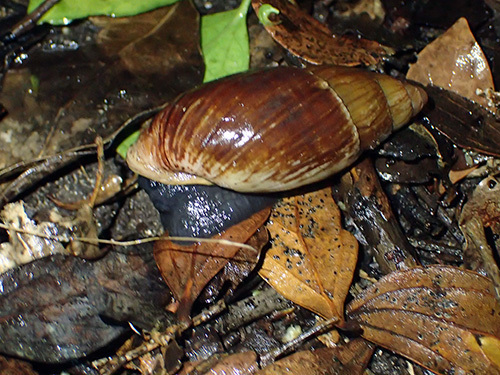
Placostylus bivaricosus
Photo: (c) ianhutton, all rights reserved, uploaded by ianhutton
Overview
The Lord Howe flax snail or the Lord Howe placostylus, scientific name Maoristylus bivaricosus, is a species of large air-breathing land snail, a terrestrial pulmonate gastropod mollusc in the family Bothriembryontidae.
Placostylus bivaricosus faces severe population decline primarily due to habitat destruction from agricultural expansion and urban development across its limited range. Introduced predators, particularly rats and other invasive species, pose significant threats to both adults and juveniles of this endemic land snail. The species' restricted distribution makes it extremely vulnerable to localized environmental changes and human disturbance.
Habitat
This endemic land snail inhabits native forests and woodland areas, typically found on trees and vegetation in humid microenvironments. The species requires specific moisture conditions and is closely associated with particular host plants within its restricted geographic range.
Other threatened species in ORTHALICIDAE

Frequently asked questions
Why is Placostylus bivaricosus classified as Critically Endangered?
Where does Placostylus bivaricosus live?
What are the main threats to Placostylus bivaricosus?
Get weekly conservation intelligence
One short digest a week of the most striking species and country data we ship, plus breaking conservation news paired with our database where it matters.
Free, no spam. One-click unsubscribe in every email.