
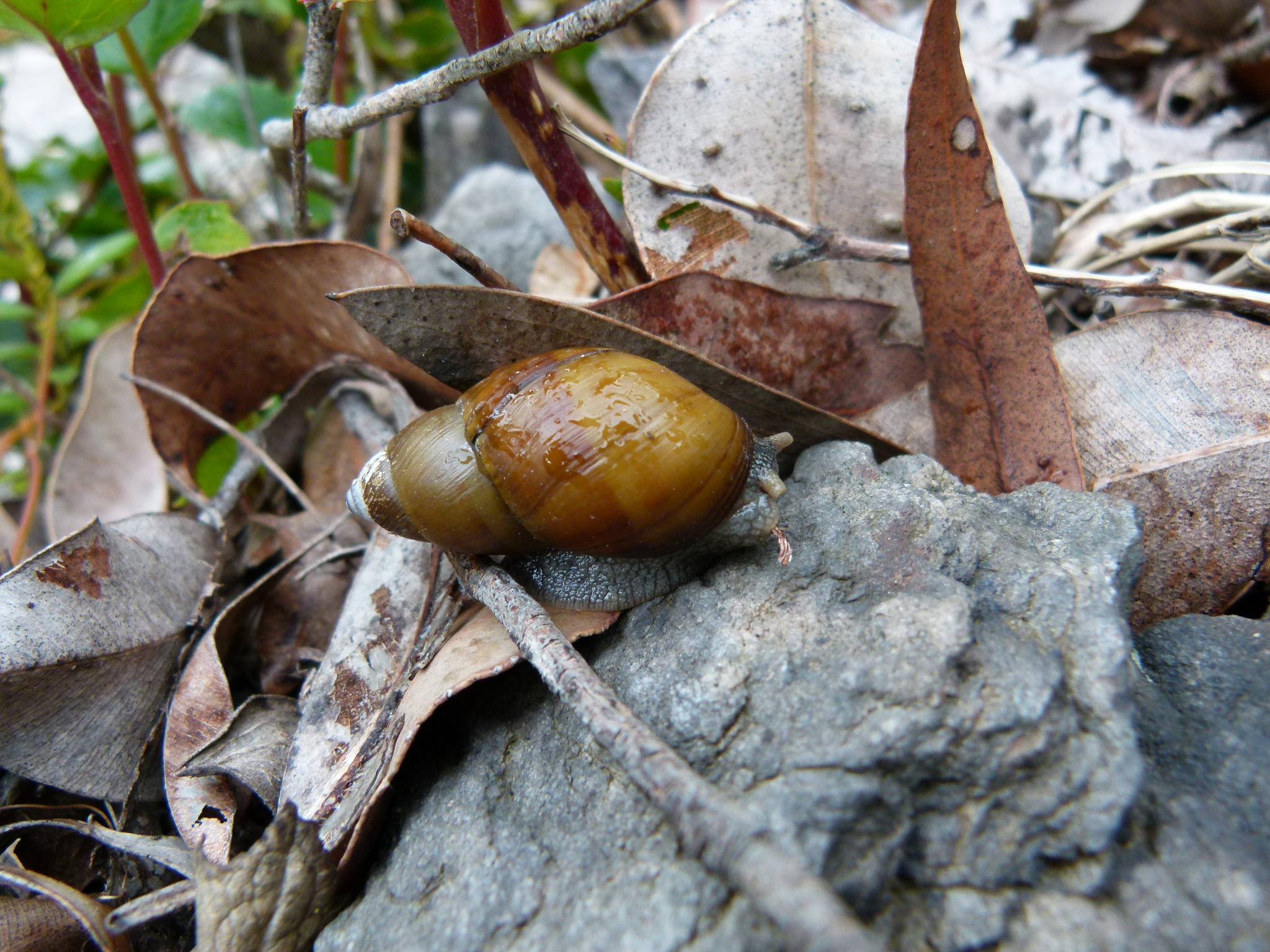
Bothriembryon brazieri
Photo: Wikimedia Commons (CC) via https://en.wikipedia.org/wiki/Bothriembryon_brazieri
Overview
Bothriembryon brazieri is a land snail belonging to the family Orthalicidae, a group of large-bodied, elongate-shelled pulmonate gastropods. Like other members of its genus, it possesses a tall, spirally coiled shell and moves via a muscular foot, feeding on decaying plant matter, fungi, and algae on soil and leaf litter surfaces. As a detritivore, it contributes to the breakdown of organic material and nutrient cycling within the soil ecosystems it inhabits, and it likely serves as a food source for various invertebrate and vertebrate predators.
The species is endemic to Australia, where it occupies terrestrial habitats, generally favouring native vegetation with adequate leaf litter, soil moisture, and shelter from temperature extremes. No population figures are available, and the current population trend is unknown.
The species faces a combination of pressures linked to land-use change and environmental variability. Ongoing urban and commercial development, along with agricultural expansion and intensification, are reducing and fragmenting suitable habitat. The spread of invasive non-native plant species alters vegetation structure and the microhabitat conditions the snail depends on.
Livestock trampling compacts soil and destroys leaf litter layers essential for shelter and moisture retention, while drought and shifting precipitation patterns threaten the humidity levels this moisture-sensitive species requires to survive and reproduce.
Specific targeted conservation programs for this species are not well documented, though it may benefit indirectly from broader habitat protection and land management efforts within its Australian range. Continued habitat loss, compounded by climate-related drying trends, suggests ongoing vulnerability. Without more detailed population monitoring and dedicated habitat safeguards, the long-term outlook for this species remains uncertain, consistent with its current Vulnerable classification.
Bothriembryon brazieri, a land snail, is losing its natural habitat as land is cleared for towns, buildings, and farming, while weeds and other non-native plants crowd out the native vegetation it depends on. Livestock trampling the ground compacts the soil and destroys shelter sites, and increasingly dry conditions and unpredictable rainfall make it harder for the snail to survive. Since all of these pressures are currently active and ongoing, the overall threat level appears to be stable to intensifying rather than decreasing.
Habitat
This terrestrial gastropod inhabits native grasslands, open woodlands, and scrubland environments in southeastern Australia, typically sheltering under rocks, logs, and leaf litter in areas with well-drained soils. The species requires intact native vegetation communities that provide appropriate microhabitat conditions and food sources.
Other threatened species in ORTHALICIDAE
Threatened in Australia
Frequently asked questions
Why is Bothriembryon brazieri classified as Vulnerable?
Where does Bothriembryon brazieri live?
What are the main threats to Bothriembryon brazieri?
Get weekly conservation intelligence
One short digest a week of the most striking species and country data we ship, plus breaking conservation news paired with our database where it matters.
Free, no spam. One-click unsubscribe in every email.