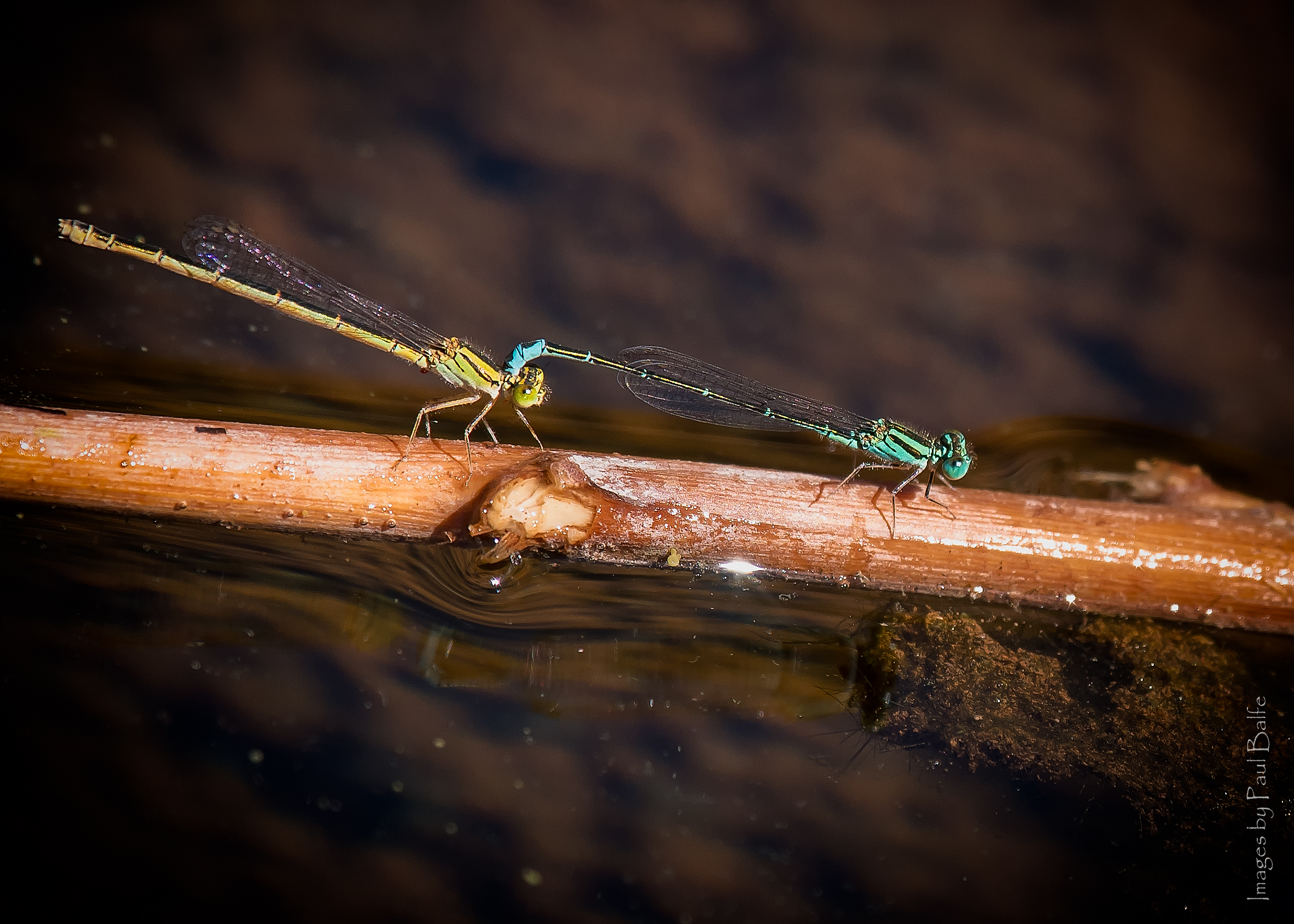
Pilbarra Billabongfly
Austroagrion pindrina
Photo: Wikimedia Commons (CC) via https://en.wikipedia.org/wiki/Austroagrion_pindrina
Overview
This small damselfly belongs to the family Coenagrionidae, a group of narrow-bodied, weak-flying odonates typically found perching near water with wings held closed along the body. Like other members of its genus, it likely displays the slender build, blue and black coloration, and delicate flight typical of pond damselflies. As both a predator and prey species, it plays a role in freshwater and riparian food webs, with larvae hunting small aquatic invertebrates and adults feeding on tiny flying insects near water bodies.
Adults are also an important food source for birds, fish, and other predators along freshwater margins.
The species is found in Australia, though detailed distribution data and specific habitat associations have not yet been formally assessed. Based on its genus, it is presumed to be associated with freshwater habitats such as slow-moving streams, billabongs, or wetland margins, consistent with the ecological needs of related Austroagrion species.
The primary documented threat is habitat shifting and alteration, an ongoing pressure likely linked to changes in water availability, land use, or hydrological patterns affecting the freshwater systems this species depends on. No population estimates are currently available, and the population trend is listed as unknown, limiting the ability to assess trajectory with precision.
Specific conservation measures targeting this species have not been documented. Its listing as Vulnerable reflects concern based on available habitat and range data rather than confirmed population decline.
Given the ongoing nature of habitat alteration and the absence of population monitoring, the species' outlook remains uncertain. Continued habitat pressure without corresponding survey or monitoring efforts suggests a need for further assessment to clarify population status and inform any future conservation response.
The main ongoing threat to this species is the alteration of its natural habitat, such as changes to the waterways, wetlands, or billabongs it depends on for survival. These changes can affect water quality, availability, or the surrounding vegetation the species relies on. This threat is currently ongoing, with no clear indication of whether it is intensifying or stabilizing based on available data.
Conservation measures underway
Other threatened species in COENAGRIONIDAE
Threatened in Australia
Frequently asked questions
Why is Pilbarra Billabongfly classified as Vulnerable?
Where does Pilbarra Billabongfly live?
What are the main threats to Pilbarra Billabongfly?
Get weekly conservation intelligence
One short digest a week of the most striking species and country data we ship, plus breaking conservation news paired with our database where it matters.
Free, no spam. One-click unsubscribe in every email.