Phasmodes jeeba
Overview
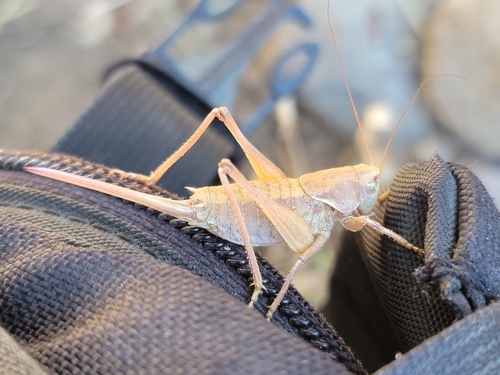
Phasmodes jeeba is a member of the katydid family Tettigoniidae, a group of orthopteran insects known for cryptic body forms that mimic vegetation and for producing sound through stridulation. Like other tettigoniids, individuals of this species likely rely on camouflage—often resembling twigs, bark, or foliage—to avoid predators, and males probably produce calling songs to attract mates. As herbivorous or omnivorous insects, katydids in this genus typically feed on plant material and contribute to their ecosystems as both consumers of vegetation and prey for birds, reptiles, and other predators, helping to support broader food web dynamics in the habitats they occupy.
The species is found in Australia, where it occupies terrestrial habitats. Its distribution is tied to specific vegetation communities that provide the shelter and host plants necessary for its life cycle.
Phasmodes jeeba is classified as Vulnerable, with an unknown population trend. The primary threats to its survival are anthropogenic and habitat-based: agricultural expansion and land clearing, urban development and infrastructure growth, and habitat fragmentation are steadily reducing and isolating suitable habitat patches. Climate change poses an additional risk by altering the availability and health of host plants the species depends on, while changes to natural fire regimes—whether through increased fire frequency or altered intensity—further degrade habitat structure.
Specific targeted conservation programs for this species are not well documented, though it would likely benefit from broader habitat protection initiatives, land-clearing regulations, and fire management strategies applied across its Australian range.
Given the ongoing and compounding nature of these threats, particularly habitat loss and fragmentation, the species' long-term outlook remains uncertain, and continued habitat protection will be important to prevent further decline.
Phasmodes jeeba is losing its habitat as land is cleared for farming and cities are built and expanded, leaving remaining patches of habitat smaller and more isolated from each other. On top of this, changing weather patterns are affecting the health of the plants it depends on, while shifts in natural fire patterns pose an additional risk to its survival. These combined pressures on its habitat and food sources appear to be ongoing and intensifying rather than easing.
Habitat
This stick insect inhabits eucalyptus woodlands and open forests in southeastern Australia, showing strong preference for areas with dense understory vegetation. The species requires specific eucalyptus species as host plants and is typically found in areas with moderate canopy cover that provides protection from extreme weather conditions.
Other threatened species in TETTIGONIIDAE
Threatened in Australia
Frequently asked questions
Why is Phasmodes jeeba classified as Vulnerable?
Where does Phasmodes jeeba live?
What are the main threats to Phasmodes jeeba?
Get weekly conservation intelligence
One short digest a week of the most striking species and country data we ship, plus breaking conservation news paired with our database where it matters.
Free, no spam. One-click unsubscribe in every email.