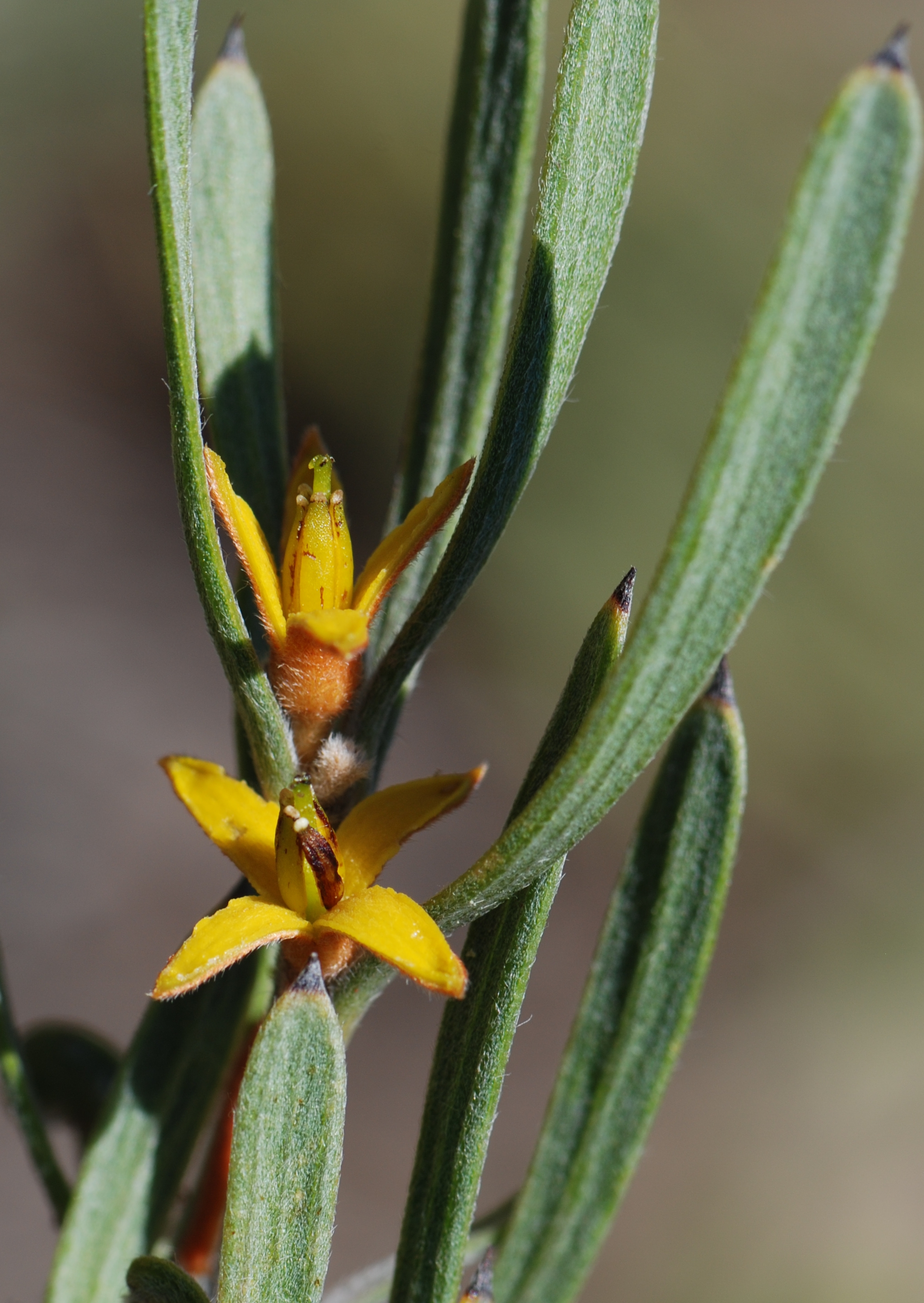
Persoonia trinervis
Photo: Wikimedia Commons (CC) via https://en.wikipedia.org/wiki/Persoonia_trinervis
Overview
Persoonia trinervis is a small shrub in the family Proteaceae, characterised by its wiry stems and small, simple leaves marked by three distinctive longitudinal veins, from which its species name derives. Like other members of the genus Persoonia, it produces small yellow flowers followed by fleshy drupes, and it plays a role in supporting native pollinators and seed-dispersing fauna within its native plant community. Persoonia species are generally slow-growing and long-lived, with many relying on fire-adapted regeneration strategies, including soil-stored seed banks that germinate following bushfire events.
This species is endemic to Australia, where it occurs within forest and shrubland habitats. Its distribution is naturally restricted, and remaining populations are fragmented across its known range.
Persoonia trinervis is classified as Critically Endangered, with a decreasing population trend. Key threats include habitat loss and degradation from road and railroad construction, which fragments populations and disrupts natural fire and hydrological regimes. Agricultural and forestry effluents contribute to soil and water quality changes that can affect plant health and regeneration.
Expansion of annual and perennial non-timber crop cultivation further reduces available habitat and increases fragmentation pressure.
Conservation efforts for threatened Persoonia species in Australia typically include habitat protection within reserves, monitoring of known populations, seed banking, and research into fire management regimes that support natural regeneration cycles. Restrictions on land clearing in areas supporting remnant populations may also apply.
Given its restricted range, ongoing habitat pressures, and ongoing population decline, the species' long-term outlook remains precarious without sustained habitat protection and active management of threats affecting its remaining populations.
Persoonia trinervis is mainly threatened by the ongoing construction and maintenance of roads, which can fragment or destroy its habitat, as well as pollution runoff from farming and forestry activities. The clearing of land for ongoing crop cultivation also continues to reduce the areas where this plant can grow. These threats appear to be stable and ongoing rather than clearly worsening or improving.
Habitat
Conservation measures underway
Other threatened species in PROTEACEAE
Threatened in Australia
Frequently asked questions
Why is Persoonia trinervis classified as Critically Endangered?
Where does Persoonia trinervis live?
What are the main threats to Persoonia trinervis?
Get weekly conservation intelligence
One short digest a week of the most striking species and country data we ship, plus breaking conservation news paired with our database where it matters.
Free, no spam. One-click unsubscribe in every email.