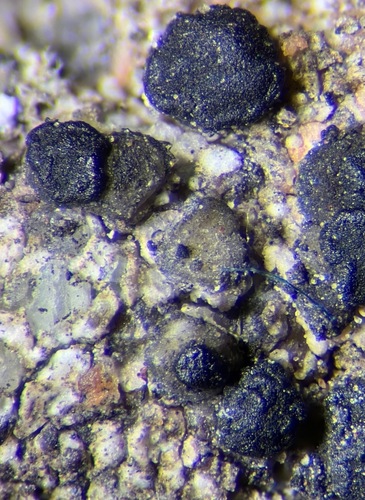
Carbonea supersparsa
Photo: (c) Hans Oberhollenzer, some rights reserved (CC BY-NC), uploaded by Hans Oberhollenzer
Overview
Carbonea supersparsa is a species of lichenicolous fungus belonging to the family Lecanoraceae. It is widespread in the Northern Hemisphere. In Iceland it has been reported growing on Lecanora cenisia near Egilsstaðir and Lecanora polytropa near Seyðisfjörður.
Parasitsvartlav faces severe threats from air pollution and acid rain, which degrade the air quality essential for this sensitive lichen species. Climate change and habitat loss from urbanization and industrial development further compromise the specialized substrates and environmental conditions this species requires for survival.
Habitat
This crustose lichen species grows on the bark of deciduous and coniferous trees in boreal and temperate forests, particularly favoring areas with clean air and stable microclimatic conditions. It typically occurs on mature trees in old-growth forest environments where air quality remains relatively unpolluted.
Other threatened species in Lecanoraceae

Frequently asked questions
Why is Carbonea supersparsa classified as Critically Endangered?
Where does Carbonea supersparsa live?
What are the main threats to Carbonea supersparsa?
Get weekly conservation intelligence
One short digest a week of the most striking species and country data we ship, plus breaking conservation news paired with our database where it matters.
Free, no spam. One-click unsubscribe in every email.