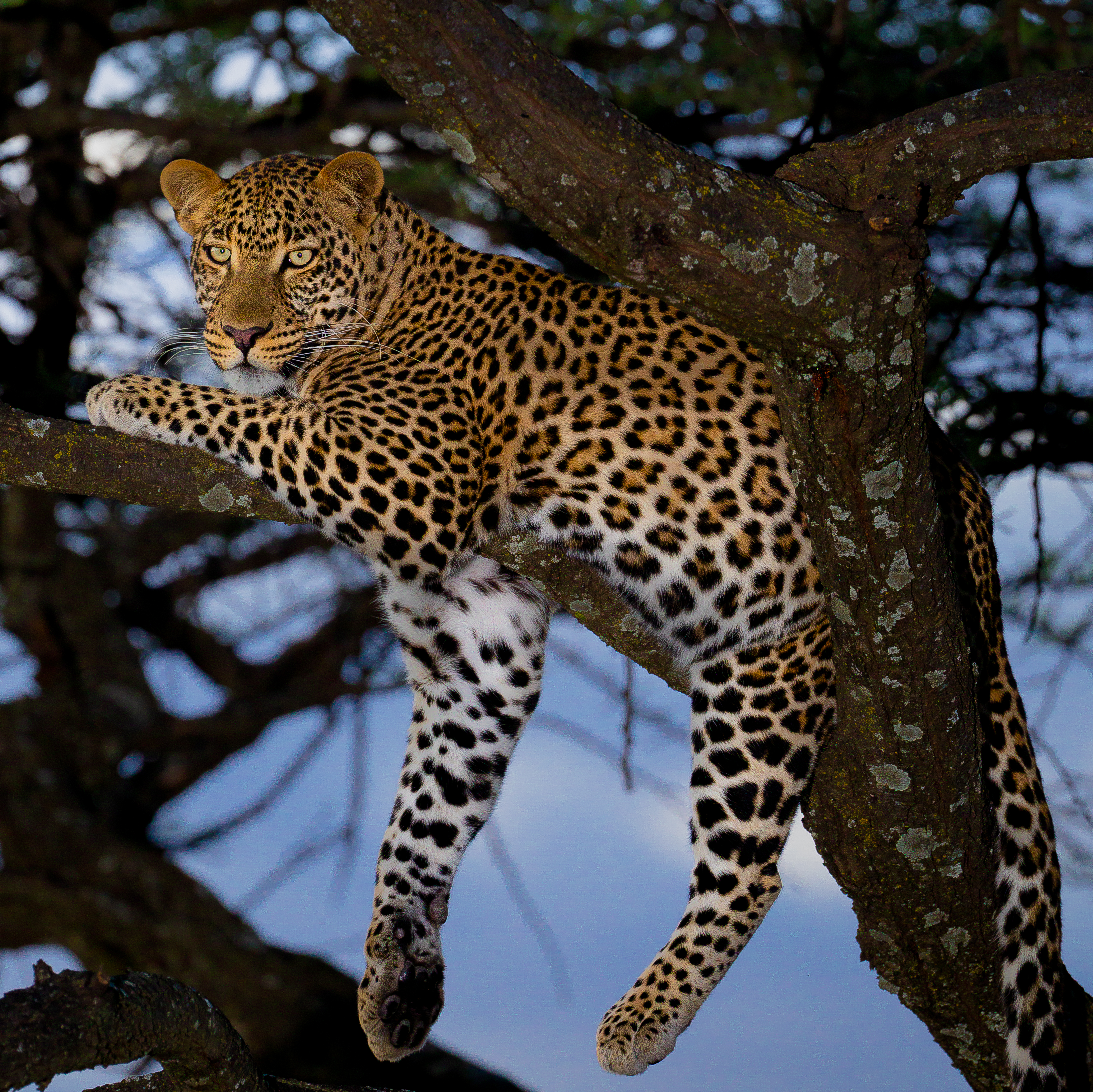
Panthera pardus
Photo: Wikimedia Commons (CC) via https://en.wikipedia.org/wiki/Leopard
Overview
The leopard is a large felid characterized by its distinctive rosette-patterned coat, muscular build, and exceptional climbing ability. Adults typically weigh 30-90 kg, with males significantly larger than females. These solitary, nocturnal predators are renowned for their adaptability and stealth, often hauling prey weighing up to twice their body weight into trees to avoid scavengers.
As apex predators, leopards play a crucial role in maintaining ecosystem balance by controlling herbivore populations and smaller carnivores.
Leopards demonstrate remarkable geographic adaptability, inhabiting diverse environments across Africa and Asia. Their range extends from the forests of Central and West Africa to the deserts of the Arabian Peninsula, the mountains of Central Asia, and tropical regions of Southeast Asia. They occupy subtropical and tropical moist lowlands, savannas, and arid desert environments, making them one of the most widely distributed big cats.
The species faces mounting pressure from human encroachment, with housing and urban development fragmenting their territories. Livestock farming creates human-wildlife conflict, often resulting in retaliatory killings. Hunting and trapping for the illegal wildlife trade targets leopards for their distinctive pelts and body parts. Agricultural expansion, particularly crop cultivation, and logging operations continue to reduce available habitat across their range.
Conservation efforts include anti-poaching initiatives, habitat corridor establishment, and community-based programs addressing human-wildlife conflict. Protected area networks provide refuge, while international trade regulations attempt to curb illegal trafficking.
Despite conservation measures, leopard populations continue declining due to persistent habitat loss and human pressures. Their adaptability provides some resilience, but long-term survival requires sustained conservation commitment across their extensive range.
Leopards face serious threats from expanding cities and towns that destroy their natural habitat, as well as farmers clearing land for crops and livestock ranching that fragments their territory. They are also heavily hunted and trapped, both by people protecting their livestock and by those seeking leopard parts for traditional medicine or the illegal wildlife trade. These threats are ongoing and continue to intensify as human populations grow and expand into leopard habitat.
Habitat
Conservation measures underway
Other threatened species in FELIDAE


Threatened in Afghanistan



Frequently asked questions
Why is Panthera pardus classified as Vulnerable?
Where does Panthera pardus live?
What are the main threats to Panthera pardus?
Get weekly conservation intelligence
One short digest a week of the most striking species and country data we ship, plus breaking conservation news paired with our database where it matters.
Free, no spam. One-click unsubscribe in every email.