
Pan's Box Turtle
Cuora pani
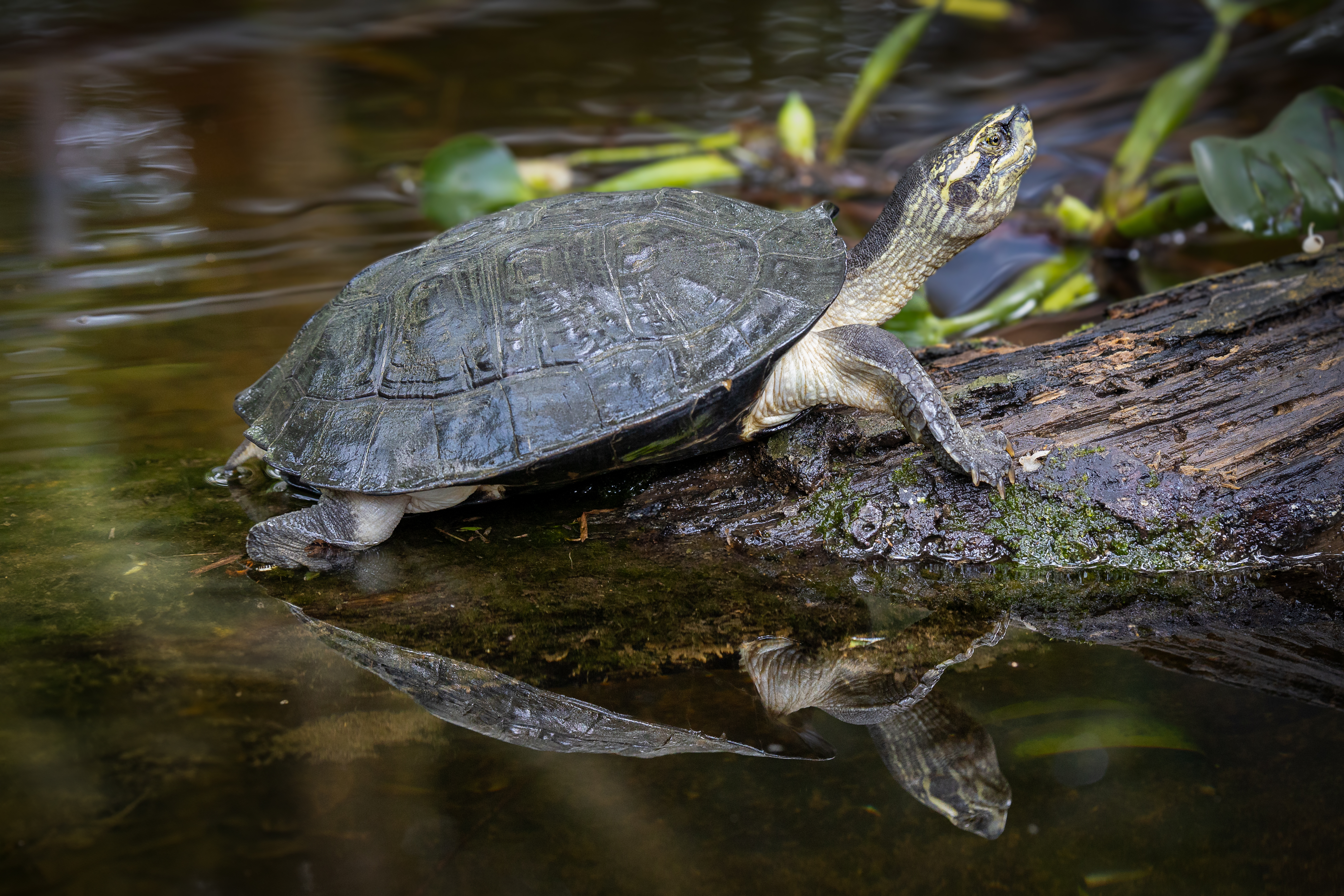
Photo: Wikimedia Commons (CC) via https://en.wikipedia.org/wiki/Pan's_box_turtle
Overview
Pan's box turtle is a species of turtle in the family Geoemydidae. The yellow-headed box turtle is sometimes included herein as a subspecies.
Cuora pani faces severe population decline primarily due to intensive collection for the traditional medicine trade and food markets across Asia. Habitat destruction from agricultural expansion and urban development has fragmented remaining populations in its limited range. The species' slow reproductive rate makes recovery extremely difficult once populations are depleted by overcollection.
Habitat
This freshwater turtle inhabits slow-moving streams, ponds, and wetlands in forested and agricultural landscapes of Southeast Asia. It prefers shallow waters with muddy substrates and abundant aquatic vegetation for foraging and shelter.
Other threatened species in GEOEMYDIDAE


Frequently asked questions
Why is Pan's Box Turtle classified as Critically Endangered?
Where does Pan's Box Turtle live?
What are the main threats to Pan's Box Turtle?
Get weekly conservation intelligence
One short digest a week of the most striking species and country data we ship, plus breaking conservation news paired with our database where it matters.
Free, no spam. One-click unsubscribe in every email.